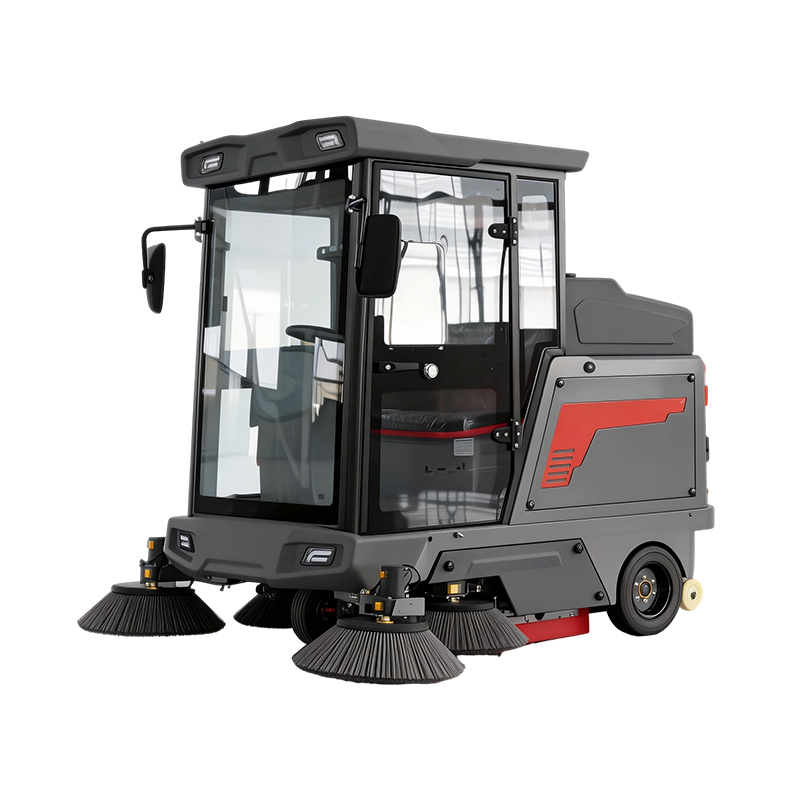
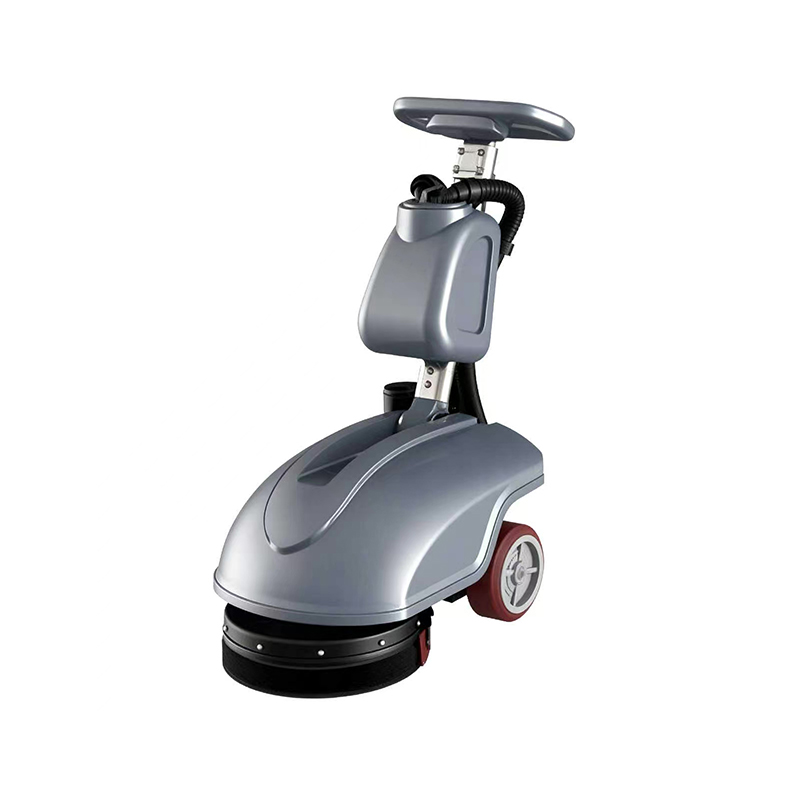
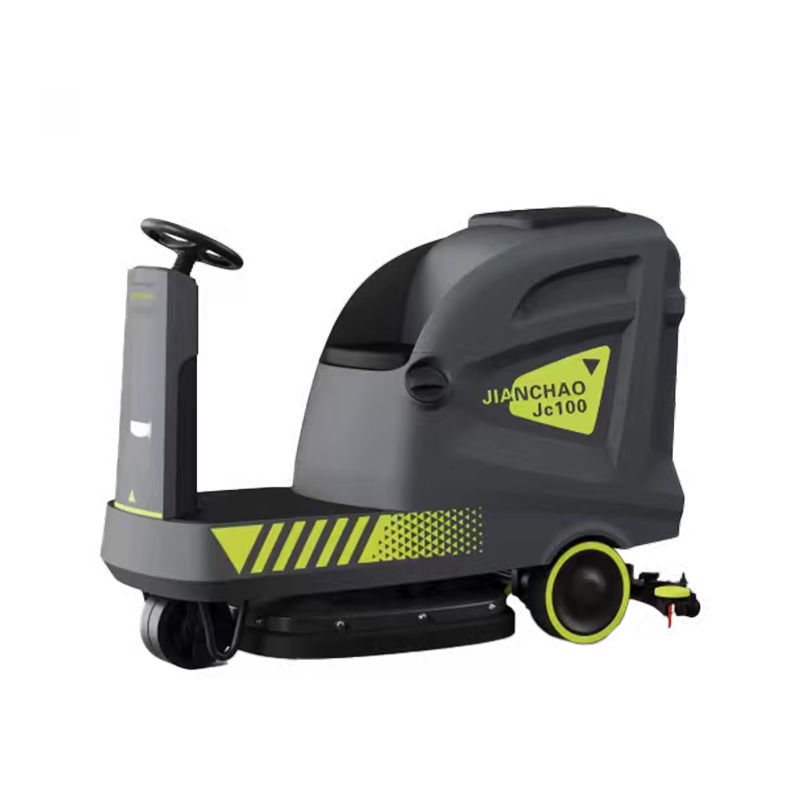
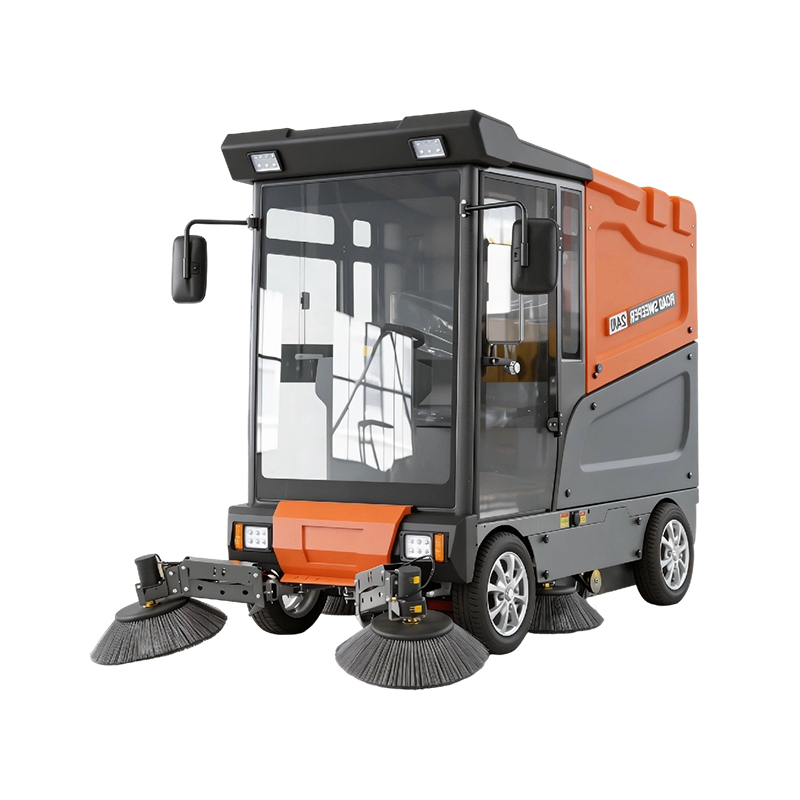
For facility managers, procurement officers, and industrial engineers tasked with maintaining large-area floor cleanliness — whether in logistics warehouses, manufacturing plants, outdoor yards, or municipal environments — the choice of sweeping equipment has direct consequences for operational efficiency, total cost of ownership, dust emission compliance, and workforce productivity. Among the available equipment categories, the sit on floor sweeper occupies a critical middle segment: more powerful and ergonomically efficient than walk-behind models, yet more agile and cost-effective than full-scale industrial road sweepers.
This article delivers an engineer-grade analysis of sit on floor sweeper technology, covering mechanical architecture, key performance parameters, application-to-specification mapping, procurement frameworks, and OEM sourcing considerations. It is designed for B2B procurement teams, facility engineers, and industrial distributors who require technical depth beyond manufacturer marketing materials.
Step 1: Five High-Traffic, Low-Competition Long-Tail Keywords
| # |
Long-Tail Keyword |
Search Intent |
| 1 |
ride on floor sweeper for large warehouse |
B2B facility procurement / logistics sector |
| 2 |
industrial sit on sweeper with vacuum system |
Technical specification / dust control requirement |
| 3 |
heavy duty outdoor ride on sweeper |
Municipal / construction yard sourcing |
| 4 |
OEM ride on floor sweeper supplier |
Private label / wholesale sourcing |
| 5 |
electric ride on sweeper for factory floor |
Green procurement / indoor emission-free operation |
Section 1: Mechanical Architecture of the Sit On Floor Sweeper
1.1 System Overview and Drive Classification
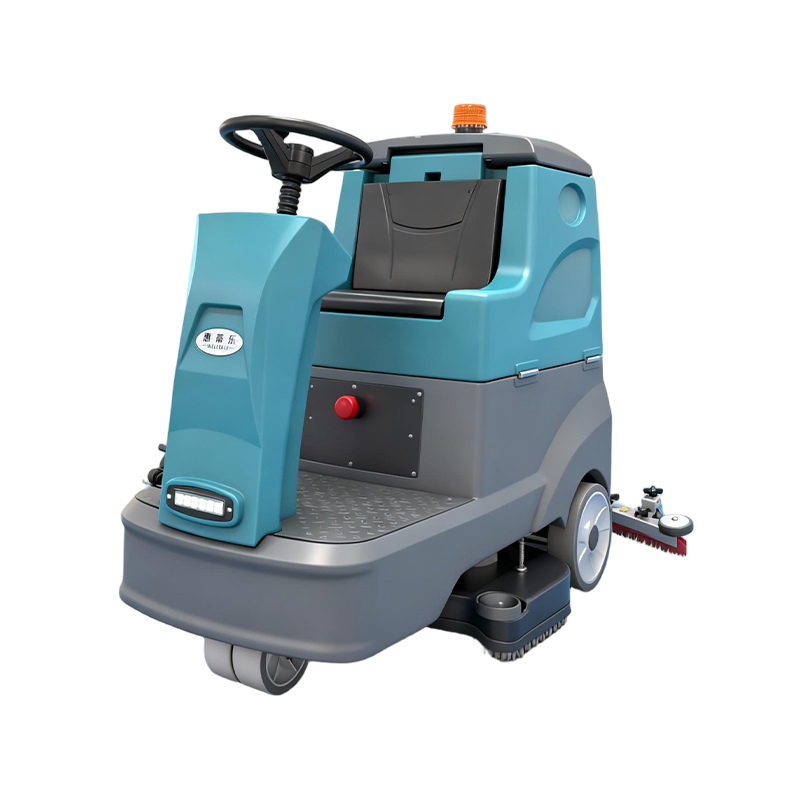
A sit on floor sweeper — also referred to as a ride on floor sweeper — is a self-propelled cleaning machine in which the operator is seated during operation, enabling sustained high-productivity sweeping across large floor areas without operator fatigue. Unlike walk-behind sweepers, the ride-on configuration allows continuous operation for 4–8 hours per shift, covering areas of 10,000–80,000 m² per hour depending on machine class and sweeping path width.
The core mechanical systems of a sit on floor sweeper include:
- Propulsion system: Electrically driven models use 24V–80V DC traction motors (typically 1.0–5.5 kW) paired with sealed lead-acid (SLA), AGM, or lithium iron phosphate (LiFePO₄) battery packs. Internal combustion (IC) variants use gasoline or LPG engines (9–25 HP) and are typically reserved for outdoor or well-ventilated industrial applications where exhaust emissions are acceptable.
- Main brush assembly: A cylindrical or disc brush (diameter 400–700 mm) driven by a dedicated electric motor (0.37–1.5 kW) or a mechanical PTO from the main drive. Brush material selection — polypropylene (PP), nylon, steel wire, or mixed fiber — depends on debris type and floor surface hardness.
- Side brush system: One or two conical side brushes (diameter 200–350 mm) sweep debris from edges and corners into the main brush path. Side brush contact pressure is typically adjustable via spring tension or electromechanical actuator.
- Hopper and vacuum system: Swept debris is transferred by the main brush into a hopper (capacity 60–300 L). In industrial sit on sweeper with vacuum system configurations, a turbine fan (0.75–2.2 kW) creates negative pressure within the hopper, capturing airborne fine particulates before they escape back to the environment. Filter systems (polyester flat-panel, bag, or cartridge) capture particles down to 1–10 µm, with some models incorporating HEPA-grade filtration for pharmaceutical or food-processing environments.
- Steering system: Mechanical steering column with front-wheel or rear-wheel steering geometry. Turning radius (typically 1,200–2,500 mm) determines maneuverability in narrow aisle configurations.
- Frame and chassis: Welded steel frame (S235/S355 structural steel) with rubber-mounted drive system to reduce operator vibration exposure per ISO 2631-1 whole-body vibration (WBV) standards.
1.2 Sweeping Mechanism: Cylindrical vs. Disc Brush Configurations
The main brush geometry of a sit on floor sweeper determines its effectiveness across different debris profiles and floor conditions:
- Cylindrical (roller) brush: Rotates on a horizontal axis parallel to the floor. Provides high sweeping force through direct mechanical contact with the floor surface. Effective for heavy, coarse debris (gravel, sand, metal swarf, wood chips) and for sweeping across uneven or textured surfaces. Brush height self-adjusts via float mechanism or motorized control to compensate for floor irregularities up to ±15 mm. Main brush replacement interval: typically 300–800 operating hours depending on debris abrasivity.
- Disc (rotary) brush: Rotates on a vertical axis. Provides a gentler, surface-conforming sweep action. Better suited for fine dust, light debris, and smooth floor surfaces. Less effective for heavy or wet debris. Some disc-brush models use a counter-rotating dual-disc configuration for improved debris capture efficiency.
- Combination systems: Higher-specification ride on floor sweeper for large warehouse models incorporate both a main cylindrical brush and trailing disc brushes to maximize capture rate across a mixed debris environment in a single pass.
1.3 Filtration Technology and Dust Emission Control
Dust emission from floor sweeping is a regulated occupational health hazard. OSHA PEL for respirable crystalline silica is 50 µg/m³ as an 8-hour TWA (29 CFR 1910.1053). EU Directive 2017/164/EU sets an OEL of 0.05 mg/m³ for respirable crystalline silica. In environments with silica-containing dust (concrete floors, stone processing, ceramic manufacturing), an industrial sit on sweeper with vacuum system equipped with adequate filtration is not merely a productivity tool — it is a regulatory compliance requirement.
Filtration performance tiers for sit on floor sweeper equipment:
- Standard polyester flat-panel filter: Captures particles ≥10 µm. Suitable for general industrial debris. Filter area: 1.5–4.0 m². Shake-out cleaning every 0.5–2 hours of operation. Replacement interval: 200–500 hours.
- Cartridge filter (pleated polyester or cellulose): Captures particles ≥3–5 µm. Filter area: 5–15 m² (pleated configuration). Automatic pulse-jet or mechanical shaker cleaning system extends continuous operating time between manual filter service. Preferred for fine dust environments (grain storage, cement, gypsum).
- HEPA-grade cartridge filter (H13/H14 per EN 1822): Captures ≥99.95% of particles ≥0.3 µm. Required for pharmaceutical manufacturing, food processing, and semiconductor facility general areas. Pressure drop monitoring (typically via differential pressure gauge) triggers filter replacement at Δp ≥250 Pa.
- Wet suppression system: Some outdoor heavy duty outdoor ride on sweeper configurations use a water mist bar ahead of the main brush to suppress dust generation at the source, reducing filtration load and improving fine particulate capture efficiency by 60–80% vs. dry sweeping alone.
Section 2: Ride On Floor Sweeper for Large Warehouse — Operational Engineering
2.1 Area Productivity Calculation
The theoretical area productivity of a ride on floor sweeper for large warehouse application is calculated as:
A = W × V × E × T
- A = Area cleaned per shift (m²)
- W = Effective sweeping width (m) — typically 0.85–1.80 m for ride-on class
- V = Operating speed (m/min) — typically 60–120 m/min (3.6–7.2 km/h)
- E = Efficiency factor — accounts for turns, hopper emptying, and aisle transitions; typically 0.65–0.80 for warehouse environments
- T = Net operating time per shift (min) — typically 240–480 min (4–8 hrs)
For a mid-class ride on floor sweeper for large warehouse with W=1.2 m, V=80 m/min, E=0.72, T=420 min: A = 1.2 × 80 × 0.72 × 420 = 29,030 m² per shift. A 50,000 m² distribution center can therefore be swept in approximately 1.7 shifts — typically achievable within a single overnight maintenance window.
2.2 Battery System Engineering for Extended Shift Operation
For electric ride on floor sweeper for large warehouse applications, battery autonomy is the primary operational constraint. Key engineering parameters:
- Energy demand calculation: Total power draw = traction motor + main brush motor + side brush motor(s) + vacuum fan motor + auxiliary (lighting, controls). A typical mid-class model draws 2.5–5.5 kW total. An 8-hour shift requires 20–44 kWh of usable battery capacity.
- SLA (sealed lead-acid) batteries: Energy density 30–50 Wh/kg. A 24V/300Ah SLA pack provides 7.2 kWh — sufficient for 3–4 hours operation. Low upfront cost (USD 300–600 per pack), but cycle life of only 400–600 cycles at 80% DoD and significant weight penalty (~150 kg for above pack).
- LiFePO₄ (lithium iron phosphate) batteries: Energy density 90–160 Wh/kg. Same 7.2 kWh requires only ~50 kg. Cycle life 2,000–5,000 cycles at 80% DoD, 5–10× longer than SLA. 80% recharge achievable in 1.5–2 hours with appropriate charger, enabling opportunity charging during shift breaks. Higher upfront cost (USD 1,200–2,500 per pack), but lower TCO over 5-year equipment lifecycle in high-utilization applications.
- Battery management system (BMS): Critical for LiFePO₄ packs. Must provide cell-level voltage balancing, temperature monitoring (operating range typically −10°C to +45°C), SOC estimation, and communication with onboard charger. Look for BMS with CAN bus interface for integration with fleet management systems.
- Opportunity charging compatibility: For multi-shift warehouse operations, on-board charger (OBC) with 110V/220V/380V compatibility and ≥20A charging current enables recharging during shift handover periods without battery pack removal.
2.3 Aisle Width and Maneuverability Requirements
Modern logistics warehouses designed per VNA (Very Narrow Aisle) or NA (Narrow Aisle) racking configurations typically have aisle widths of 1,800–2,700 mm for operating aisles and 2,700–3,600 mm for cross aisles. A ride on floor sweeper for large warehouse must be specified with turning radius and machine width compatible with the facility's aisle geometry:
- Machine body width: typically 1,050–1,400 mm (must be ≤aisle width − 400 mm for safe operation clearance)
- Minimum turning radius: 1,200–1,600 mm for most sit-on models (inside turning radius at 0° steering lock)
- Zero-turn radius (ZTR) models: available in some configurations, enabling 180° turns within machine body length — critical for VNA aisle applications
- Rear-wheel steering geometry: provides tighter turning radius for a given wheelbase vs. front-wheel steering — preferred for narrow-aisle warehouse applications
Section 3: Industrial Sit On Sweeper with Vacuum System — Dust Control Engineering
3.1 Vacuum System Design Principles
The vacuum system of an industrial sit on sweeper with vacuum system serves two functions: (1) transferring swept debris from the main brush area into the hopper via pneumatic transport, and (2) creating negative pressure within the hopper to prevent fine dust from escaping back to the ambient environment during sweeping.
Key vacuum system parameters:
- Airflow (m³/h or CFM): Determines the pneumatic transport capacity for debris and the air exchange rate through the filter. Typical range: 1,500–6,000 m³/h for ride-on class. Higher airflow enables capture of lighter, finer particles but increases energy consumption and filter loading rate.
- Static pressure (Pa or mmH₂O): The vacuum level created within the hopper. Higher static pressure improves fine dust containment. Typical range: 500–2,000 Pa for standard industrial models; up to 3,500 Pa for high-specification dust-controlled variants.
- Turbine fan design: Single-stage centrifugal fans are standard. Backward-curved impeller geometry (as opposed to forward-curved) provides higher efficiency at the operating point and lower sensitivity to dust-laden airflow — critical for longevity in high-dust environments.
- Debris discharge airlock: In continuous-operation models, a rotary valve airlock at the hopper discharge enables debris emptying without interrupting vacuum system operation — maintaining dust containment during the emptying cycle.
3.2 Filter Maintenance and Pressure Drop Management
Filter fouling is the primary cause of reduced vacuum system performance in an industrial sit on sweeper with vacuum system. As filter pressure drop (ΔP) increases with dust loading, airflow decreases and vacuum level drops — reducing fine dust capture efficiency. Best-practice filter management:
- Install differential pressure gauge (or electronic ΔP sensor) across filter to enable condition-based maintenance rather than time-based maintenance
- Specify automatic pulse-jet filter cleaning (pressurized air burst, 5–8 bar, 50–100 ms pulse duration) for high-dust-load applications — extends continuous operation interval by 3–5× vs. manual shake-out
- Maintain filter replacement log with cumulative operating hours and ΔP readings to track filter service life and optimize procurement
- For HEPA filter variants, record initial ΔP at commissioning and replace when field ΔP reaches 2.5× initial value (per EN 1822 field performance guidance)
- Store replacement filters in sealed packaging to prevent pre-installation moisture absorption (cellulose-based filters are hygroscopic and lose filtration efficiency when wet)
Section 4: Heavy Duty Outdoor Ride On Sweeper — Environmental and Structural Specifications
4.1 Outdoor Operating Challenges vs. Indoor Models
A heavy duty outdoor ride on sweeper operates under fundamentally different mechanical and environmental stresses than indoor warehouse models. Key differentiation requirements:
- Debris profile: Outdoor environments generate mixed debris streams including stones (up to 50 mm diameter for some construction yard applications), wet leaves, sand, cigarette butts, packaging waste, and organic material — far more abrasive and mechanically challenging than indoor manufacturing debris. Main brush bristle stiffness, brush core material, and hopper wall thickness must be specified accordingly.
- Floor surface variability: Outdoor surfaces include asphalt (smooth to coarsely textured), concrete (plain or exposed aggregate), pavers, and compacted gravel. Main brush float mechanism must accommodate surface height variations of ±25 mm or more. Brush wear rate is 3–8× higher on outdoor surfaces vs. sealed indoor concrete.
- IP (Ingress Protection) rating: Per IEC 60529, outdoor electrical components require minimum IP54 (dust-tight, splash-resistant) for the traction system controller, battery enclosure, and vacuum motor. Drive motors in wheel hub configurations should meet IP65 or better. Internal combustion engine variants require air filter pre-cleaners for dusty outdoor operation.
- Structural load capacity: Outdoor hopper capacity requirements are typically 200–400 L (vs. 60–150 L for indoor models) due to higher debris volumes and longer distances between dump points. Hopper and frame must be designed for equivalent static load plus dynamic impact from large debris items. FEA (Finite Element Analysis) verification of frame weld joints under 2× rated hopper load is good engineering practice for heavy-duty outdoor models.
- Traction and stability: Outdoor operation on slopes (typically up to 15° grade) requires differential traction control or limited-slip differential on drive axle. Machine center of gravity must be verified by manufacturer via dynamic tilt-table testing per ISO 22915 or equivalent forklift stability standard adapted for sweeper geometry.
- Thermal management: IC engine variants require coolant temperature management rated to ambient temperatures up to +45°C (for Middle East and Southeast Asian deployments) and cold-start capability down to −20°C (for Northern European or North Asian markets). Electric variants require battery thermal management system (heating/cooling) for operation across this temperature range.
4.2 Emission Standards for Outdoor IC Engine Sweepers
Internal combustion engine heavy duty outdoor ride on sweeper models sold in regulated markets must comply with applicable exhaust emission standards:
- EU Stage V (Regulation (EU) 2016/1628): Applies to non-road mobile machinery (NRMM) engines. For engines in the 19–37 kW power range (typical for outdoor sit-on sweepers), Stage V limits: CO 3.5 g/kWh, HC+NOx 4.7 g/kWh, PM 0.015 g/kWh, PN 1×10¹² /kWh. Requires DPF (diesel particulate filter) for diesel variants.
- US EPA Tier 4 Final: Equivalent stringency to EU Stage V. Applies to engines above 19 kW in off-road equipment sold in the US market.
- China Stage IV (GB 20891-2014): Less stringent than EU Stage V but mandatory for domestically-sold IC engine equipment. Export models supplied to EU/US markets require Stage V/Tier 4 compliant engines.
- LPG and gasoline engine variants: Typically used for lower-power outdoor sweepers (below 15 kW). Subject to different emission pathways — no DPF required, but catalytic converters mandatory for EU/US compliance. LPG variants preferred for enclosed outdoor environments (underground car parks, covered loading docks) where CO emissions from gasoline engines exceed permissible workplace concentrations.
Section 5: OEM Ride On Floor Sweeper Supplier — Procurement and Customization Framework
5.1 OEM vs. ODM: Defining the Engagement Model
For distributors, rental fleet operators, and facility service companies building private-label sweeper product lines, understanding the difference between OEM and ODM engagement models is foundational to supplier selection:
- OEM (Original Equipment Manufacturer): The buyer provides product specifications, design, and branding; the manufacturer produces to spec. Buyer retains full product IP ownership. Requires the buyer to have internal engineering capability to define complete product specifications. Lead time to first production: 3–6 months (tooling and validation cycle).
- ODM (Original Design Manufacturer): The manufacturer provides an existing platform design that the buyer customizes (branding, color, feature configuration, packaging). Buyer licenses the manufacturer's design IP. Lower engineering investment and faster time-to-market (4–12 weeks to first production for minor customizations). Appropriate for distributors entering the market without internal product engineering teams.
- Hybrid OEM/ODM: Starting from an ODM platform, the buyer commissions major engineering modifications (battery upgrade, wider sweeping path, additional sensor integration) that result in a differentiated product — documented via engineering change orders (ECOs) with shared IP ownership or negotiated licensing terms.
5.2 Technical Specification Documentation for OEM Sourcing
When engaging an OEM ride on floor sweeper supplier, buyers should provide or request a complete technical specification package covering:
- Performance requirements: Minimum sweeping width, area productivity (m²/hr), theoretical and operational battery autonomy, maximum grade ability (%), minimum turning radius
- Debris and surface profile: Target debris type (size distribution, density, moisture content), floor surface type and condition, indoor/outdoor application
- Power system: Electric (specify voltage, battery chemistry, charging interface) or IC engine (specify fuel type, emission standard, rated power)
- Filtration requirement: Filtration efficiency class, filter type, cleaning mechanism, dust emission target (mg/m³ at operator position)
- Structural and safety standards: Target market certification requirements (CE marking per EU Machinery Directive 2006/42/EC, UL for North America, CCC for China domestic market)
- Branding and configuration: Livery specification (RAL color codes), logo placement, operator interface language requirements, remote monitoring/telematics integration if required
- Quality and documentation: Required test reports (CE technical file, EMC test report, noise emission declaration per 2000/14/EC for outdoor equipment), warranty terms, spare parts availability commitment
5.3 About Zhejiang Jianchao Machinery Co., Ltd.
Zhejiang Jianchao Machinery Co., Ltd. brings over 20 years of factory establishment experience and deep industry expertise to the design and manufacture of sit on floor sweepers and related industrial cleaning equipment. Originally established in Wuxi, the company relocated to Langshan Industrial Park, Xiaopu Town, Changxing County, Zhejiang Province in March 2024 — a strategic move that positions it within a superior logistics corridor less than 100 km east of Shanghai Pudong International Airport and south of Hangzhou Xiaoshan International Airport, with direct G50 Shanghai-Chongqing Expressway access only 5 km from the facility gate.
Operating from a 30,000+ m² integrated manufacturing base, the company functions as both a China Custom Ride On Floor Sweeper Supplier and an OEM/ODM Ride On Floor Sweeper manufacturer — supporting the full spectrum from standard catalog product supply to deeply customized private-label programs. Its product portfolio encompasses floor scrubbers, floor moppers, sweepers, pallet trucks, electric trucks, electric luggage trucks, and electric lifting platforms, giving distributors and facility service operators a single-source solution for both cleaning machinery and logistics handling equipment.
Operating under the philosophy of "Quality First, Innovation-Driven, Customer Satisfaction," Jianchao's engineering teams apply continuous R&D investment and in-depth market insights to develop equipment aligned with evolving regulatory requirements (EU Stage V, CE Machinery Directive, EMC standards), customer operational profiles, and sustainability targets. For international distributors seeking a technically credible, commercially flexible OEM ride on floor sweeper supplier with the manufacturing scale and logistics infrastructure to support global supply chain requirements, Zhejiang Jianchao represents a compelling partnership option as it continues its expansion into international markets.
Section 6: Electric Ride On Sweeper for Factory Floor — Sustainability and Compliance Drivers
6.1 Indoor Air Quality Regulations Driving Electric Adoption
The transition from IC-engine to electric ride on sweeper for factory floor applications is increasingly driven by regulatory compliance rather than voluntary sustainability commitments:
- OSHA 1910.1000 (Air Contaminants): Carbon monoxide PEL is 50 ppm as an 8-hour TWA. A gasoline engine sweeper operating in an enclosed warehouse can generate localized CO concentrations of 100–500 ppm within 15 minutes without adequate ventilation — a direct OSHA compliance risk. Electric models produce zero exhaust emissions, eliminating this hazard entirely.
- EU Directive 1999/13/EC (VOC emissions): LPG and gasoline engine exhaust contains volatile organic compounds (VOCs) including benzene (IARC Group 1 carcinogen). Food-grade, pharmaceutical, and electronics manufacturing facilities are particularly sensitive to VOC contamination from cleaning equipment. Electric sweepers produce no VOC emissions during operation.
- Noise emission regulations: EU Directive 2000/14/EC mandates guaranteed sound power level (LWA) declarations for outdoor power equipment. For indoor factory environments, OSHA and EU Directive 2003/10/EC set 85 dB(A) as the action level for mandatory hearing protection provision. Electric sweepers typically operate at 68–75 dB(A) — 10–15 dB(A) lower than IC-engine equivalents of equivalent productivity — enabling operation during sensitive production shifts without hearing protection mandates.
- LEED and BREEAM green building certification: Facilities seeking LEED v4 or BREEAM 2018 certification in the Operations and Maintenance (O+M) category earn credits for using low-emission, low-noise cleaning equipment. An electric ride on sweeper for factory floor contributes to LEED IEQ Credit (Enhanced Indoor Air Quality Strategies) and EQ Credit (Acoustic Performance).
6.2 Lifecycle Carbon Comparison: Electric vs. LPG vs. Diesel
A lifecycle carbon analysis (scope 1 + scope 2) for equivalent-productivity sweeper platforms over a 5-year, 2-shift/day operational period (5,000 operating hours total):
| Parameter |
Electric (LiFePO₄, grid average) |
LPG Engine |
Diesel Engine |
| Energy consumption |
3.5 kWh/hr × 5,000 hr = 17,500 kWh |
2.8 kg LPG/hr × 5,000 hr = 14,000 kg |
1.8 L diesel/hr × 5,000 hr = 9,000 L |
| Scope 1 CO₂ (direct) |
0 kg CO₂ |
~42,700 kg CO₂ |
~23,800 kg CO₂ |
| Scope 2 CO₂ (electricity, 0.4 kg/kWh) |
~7,000 kg CO₂ |
0 kg CO₂ |
0 kg CO₂ |
| Total lifecycle CO₂ (5 yr) |
~7,000 kg CO₂ |
~42,700 kg CO₂ |
~23,800 kg CO₂ |
| CO₂ reduction vs. diesel |
−71% |
+79% |
Baseline |
Note: Electric model CO₂ reduces further as grid decarbonizes — in markets with renewable electricity (>80% renewables, e.g., Norway, Iceland), lifecycle CO₂ for electric sweeper approaches near-zero.
Section 7: Procurement Evaluation Framework — Selecting the Right Sit On Floor Sweeper
7.1 Application-to-Specification Matrix
| Application |
Recommended Class |
Key Specs |
Power System |
Critical Certifications |
| Logistics / distribution warehouse |
Mid-class ride-on |
W ≥1.2 m, autonomy ≥6 hr, turning radius ≤1,500 mm |
Electric (LiFePO₄) |
CE, EN 60335-2-72, EMC |
| Automotive / heavy manufacturing |
Heavy-duty ride-on |
Hopper ≥180 L, steel wire brush option, HEPA filter |
Electric or LPG |
CE, ATEX (if applicable), noise declaration |
| Food processing / pharma |
Sanitary-grade ride-on |
HEPA H13 filter, stainless steel contact surfaces, IP65 electrical |
Electric only |
CE, FDA compliance (materials), EHEDG guidance |
| Outdoor yard / logistics apron |
Heavy-duty outdoor ride-on |
Hopper ≥250 L, IP54 minimum, grade ability ≥15%, wet suppression |
IC engine (Stage V) or high-voltage electric |
CE, EU Stage V or EPA Tier 4, 2000/14/EC noise |
| Municipal / airport |
Large outdoor ride-on |
W ≥1.5 m, productivity ≥40,000 m²/hr, GPS telematics |
IC (LPG/CNG) or electric |
CE, Stage V, road homologation (where required) |
7.2 Total Cost of Ownership (TCO) Model
A rigorous TCO model for sit on floor sweeper procurement over a 5-year lifecycle should include the following cost categories:
- Capital expenditure (CapEx): Purchase price or financing cost. Range: USD 8,000–60,000 depending on machine class and power system.
- Energy cost: Electricity cost (electric models: USD 0.08–0.20/kWh × 3.5 kWh/hr × operating hours/year) or fuel cost (LPG: USD 0.80–1.50/kg × 2.8 kg/hr; diesel: USD 1.20–2.00/L × 1.8 L/hr).
- Consumable costs: Main brush replacement (USD 80–400 every 300–600 hr), side brushes (USD 20–80 every 150–300 hr), filter replacement (USD 30–300 every 200–500 hr), squeegee blades if applicable.
- Maintenance labor: Preventive maintenance (PM) schedule compliance — typically 50-hr, 250-hr, and 500-hr PM intervals. Labor cost: 1.5–4 hours per PM event × technician hourly rate.
- Battery replacement (electric models): LiFePO₄ at 2,000 cycles (80% DoD) lasts 5–8 years at 1-shift/day usage. SLA at 500 cycles requires replacement every 1.5–2.5 years — a significant TCO disadvantage for high-utilization applications.
- Downtime cost: Each hour of sweeper downtime in a 24/7 distribution center represents an equivalent productivity deficit that must be covered by either overtime labor or reduced facility cleanliness standards. Supplier parts availability (lead time for critical spare parts) is therefore a TCO-relevant procurement criterion, not merely a service convenience.



 English
 中文简体
中文简体
 Español