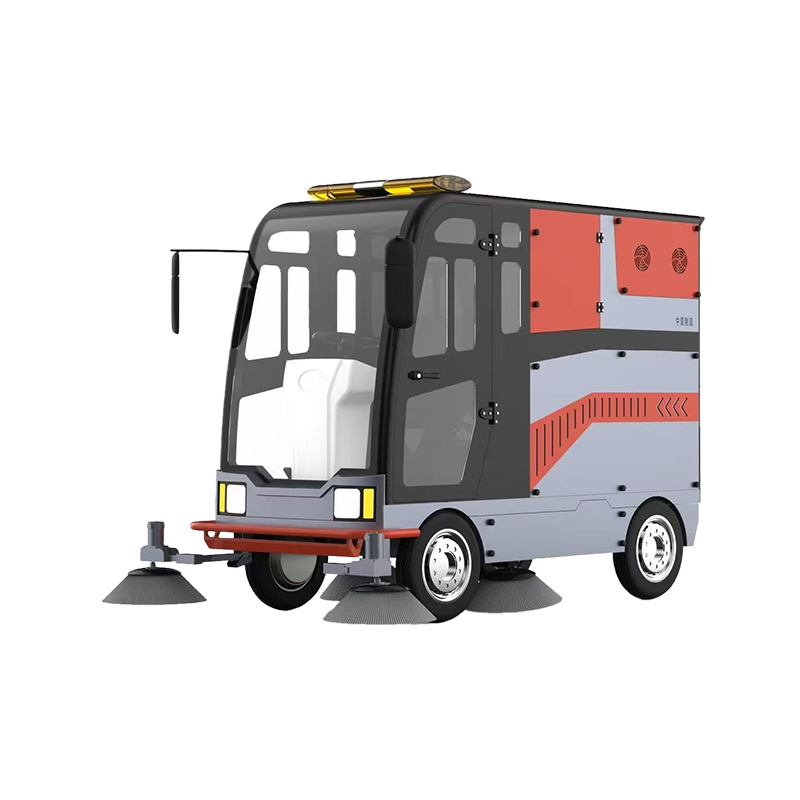
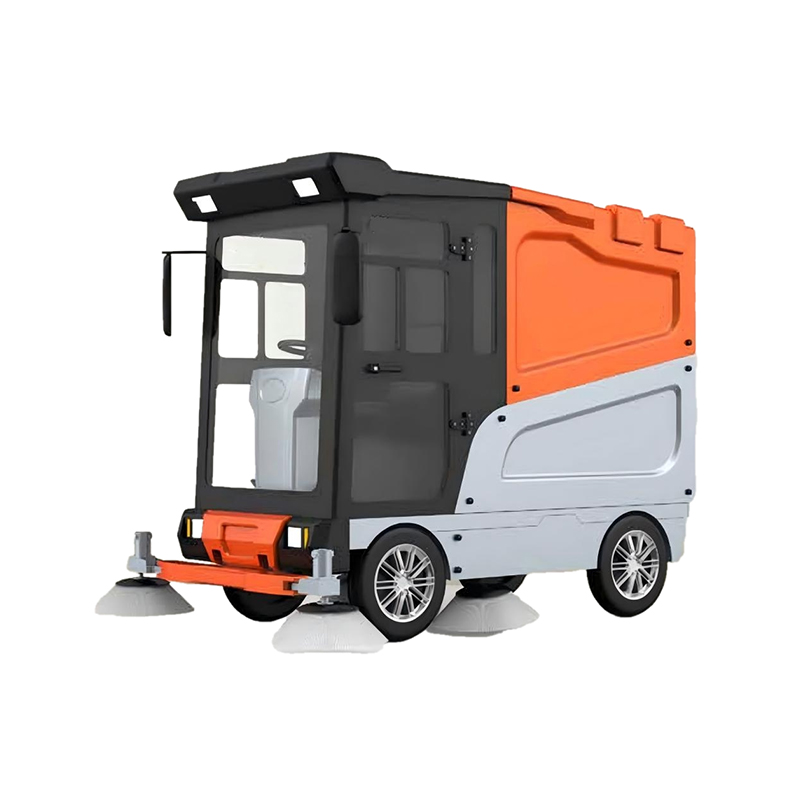
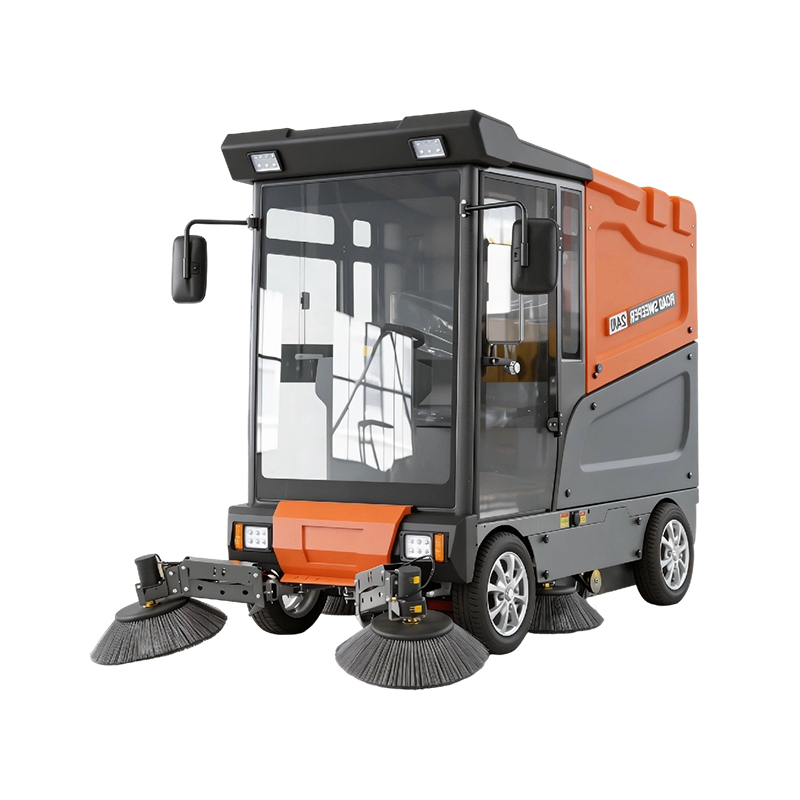
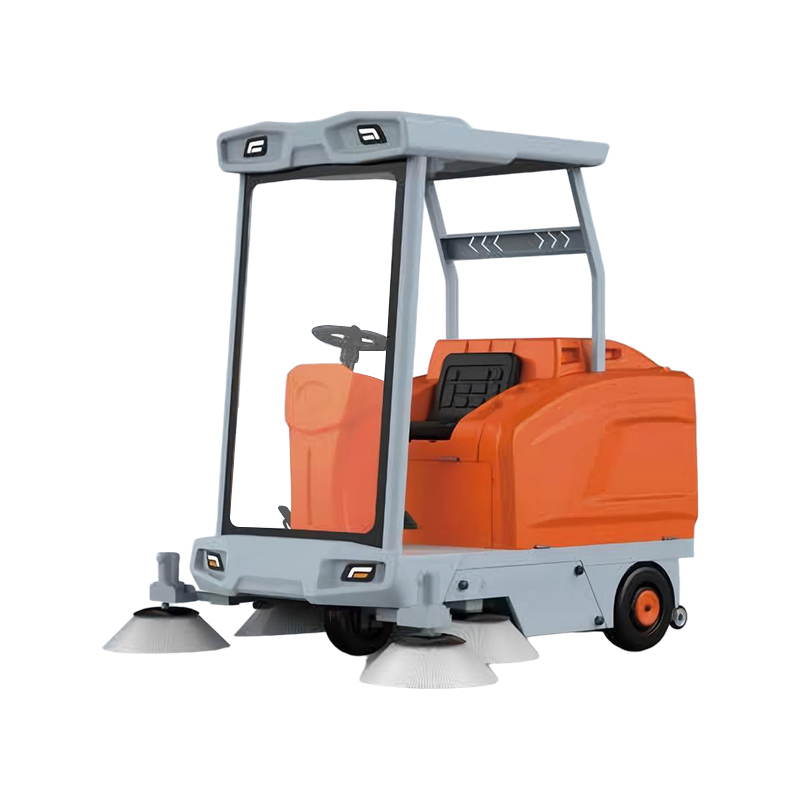
Large-scale outdoor logistics hubs operate under high-frequency vehicle traffic, requiring debris management systems that minimize operational downtime. Evaluating the return on investment for the JCG-2400 Four-Wheel High-Efficiency Sweeper involves a quantitative assessment of cleaning productivity, mechanical durability, and energy consumption ratios. This guide breaks down the engineering variables that determine the long-term financial viability of high-capacity sweeping assets.
Productivity Throughput and Cleaning Path Efficiency Analysis
The primary driver of ROI in a logistics environment is the hourly coverage rate. The JCG-2400 Four-Wheel High-Efficiency Sweeper is engineered with a specific scrubbing and sweeping width to maximize pass efficiency on asphalt and concrete surfaces.
- 1. Theoretical vs. Actual Cleaning Coverage: With a 2400mm cleaning width, the unit achieves a high square-meter-per-hour output. How to calculate the cleaning efficiency of 2400mm sweepers requires factoring in a 15% overlap and an average working speed of 8 to 12 km/h, resulting in a net productivity that significantly reduces labor shifts.
- 2. Four-Wheel Chassis Stability and Gradeability: Logistics hubs often feature ramps and uneven drainage gradients. The four-wheel configuration provides a stable center of gravity, ensuring JCG-2400 sweeper performance on 15 degree inclines remains consistent without loss of brush pressure or traction.
- 3. Debris Collection Volume: The hopper capacity directly correlates to "time on floor." By utilizing a large-volume hopper, the JCG-2400 Four-Wheel High-Efficiency Sweeper reduces the frequency of dumping cycles, which is a major factor when comparing JCG-2400 vs three-wheel industrial sweepers for outdoor use.
Total Cost of Ownership and Component Durability Standards
A hard-core ROI analysis must include maintenance intervals and the lifecycle of wear parts. The JCG-2400 Four-Wheel High-Efficiency Sweeper utilizes materials designed for high-abrasion environments.
- 1. Brush Filament Material Science: The main and side brushes are typically composed of a high-density polypropylene and steel wire mix. What is the lifespan of JCG-2400 sweeper brushes? Under standard industrial conditions, these components are rated for 200 to 300 hours of active contact before requiring adjustment or replacement.
- 2. Hydraulic and Drive System Reliability: Utilizing industrial-grade hydraulic pumps and motors ensures that the JCG-2400 Four-Wheel High-Efficiency Sweeper maintains a high Mean Time Between Failure (MTBF). This reliability is essential for reducing maintenance costs for large industrial sweepers over a 5-year lifecycle.
- 3. Filtration and Dust Suppression Systems: To prevent PM10 particulate recirculation, the unit employs a multi-stage polyester filter with an automated shaker. Why JCG-2400 filtration standards matter for urban logistics involves compliance with environmental regulations and the protection of sensitive warehouse electronics from airborne dust.
Energy Consumption and Power Source Efficiency
Whether utilizing high-capacity lead-acid or lithium-ion battery architectures, the energy density determines the machine's duty cycle. The JCG-2400 Four-Wheel High-Efficiency Sweeper optimizes power distribution between the traction drive and the vacuum motors.
- 1. Battery Runtime and Opportunity Charging: For 24/7 logistics hubs, finding the best battery for JCG-2400 outdoor sweepers is critical. Lithium-ion configurations allow for fast-charging during operator breaks, maintaining a 90% uptime ratio.
- 2. Brake Energy Recovery Systems: Advanced four-wheel models often incorporate regenerative braking, which can extend the runtime by up to 10% during high-frequency stop-start operations in congested dock areas.
- 3. Water Atomization for Dust Control: The precision spray nozzles consume minimal water (liters per hour) while providing 100% dust suppression, which is a key metric in evaluating JCG-2400 sweeper water consumption efficiency.
Operational Risk Mitigation and Safety Compliance
The secondary ROI of the JCG-2400 Four-Wheel High-Efficiency Sweeper is found in the reduction of workplace accidents and secondary damage to facility infrastructure.
- 1. Automated High-Dump Safety: The hydraulic high-dump system allows for safe disposal into 1100L bins. Is the JCG-2400 high-dump system safe for slopes? Integrated safety sensors prevent elevation if the chassis detect an unsafe tilt angle, protecting the operator and the machine.
- 2. Non-Marking Industrial Tires: High-traction, non-marking tires ensure that the sweeper does not leave rubber deposits on expensive warehouse floor coatings, improving facility ROI with non-marking sweeper tires by eliminating secondary floor scrubbing costs.
- 3. Structural Steel Frame Resilience: The chassis is typically constructed from ASTM A36 equivalent steel with powder coating, providing a tensile strength that resists impact damage from forklift traffic.
Comparative Performance: JCG-2400 vs. Standard Industrial Sweepers
When calculating ROI, it is necessary to compare the technical delta between the JCG-2400 and standard 1900mm class sweepers.
| Technical Metric |
Standard 1900mm Sweeper |
JCG-2400 High-Efficiency |
| Cleaning Width |
1900 mm |
2400 mm |
| Theoretical Efficiency |
15,000 m2/h |
22,000+ m2/h |
| Filter Surface Area |
8 m2 |
12 m2 |
| Turning Radius |
1200 mm |
1050 mm |
- 1. Maneuverability in Narrow Aisles: Despite its 2400mm width, the four-wheel steering geometry allows for a tight turning radius. How to use JCG-2400 sweepers in narrow logistics aisles effectively involves utilizing the zero-turn capability for end-of-row transitions.
- 2. Climbing Power and Torque: The dual-motor drive system provides the necessary torque for JCG-2400 sweepers on 20% ramps, ensuring that outdoor loading docks are accessible regardless of weather conditions.
- 3. Electronic Diagnostic Integration: Real-time monitoring of motor current and battery state-of-charge allows for predictive maintenance, which is a core component of minimizing downtime for the JCG-2400 Four-Wheel High-Efficiency Sweeper.
Technical FAQ
1. What is the expected lifespan of the JCG-2400 Four-Wheel High-Efficiency Sweeper frame?
The heavy-duty structural steel frame is designed for a service life exceeding 8 to 10 years in outdoor industrial environments, provided that the anti-corrosion coating is maintained.
2. Can the JCG-2400 handle large debris like wooden pallet splinters?
Yes, the main brush chamber is engineered with a high-clearance flap that allows for the intake of bulky debris up to 50mm in diameter without clogging the vacuum system.
3. How does the four-wheel design affect tire wear?
The four-wheel configuration distributes weight more evenly than three-wheel models, resulting in a 20% reduction in ground pressure and extending tire tread life during heavy-load operations.
4. What are the specific filtration standards for the JCG-2400?
The unit typically features a polyester pleated filter with a filtration efficiency of 99.5% for particles down to 3 microns, meeting M-class industrial standards.
5. Is the hydraulic high-dump compatible with standard global waste containers?
The discharge height of 1450mm is specifically designed to clear the side-walls of 1100L and 1300L mobile waste bins and standard stationary skips.
Technical References
- ISO 12100: Safety of machinery — General principles for design — Risk assessment and reduction.
- ASTM A36/A36M: Standard Specification for Carbon Structural Steel.
- IEC 60335-2-72: Particular requirements for floor treatment machines for commercial use.



 English
 中文简体
中文简体
 Español