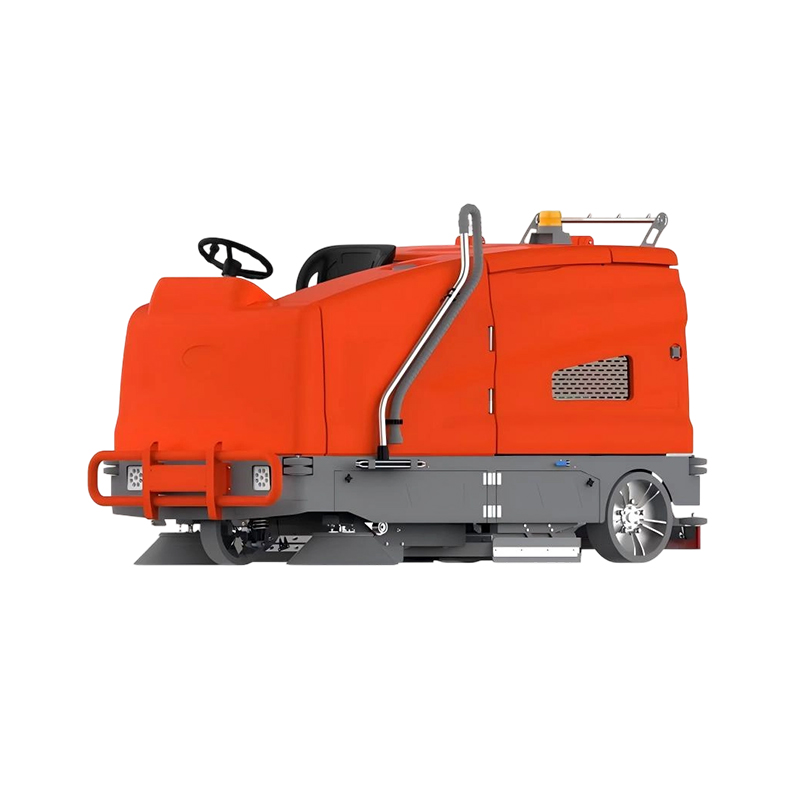
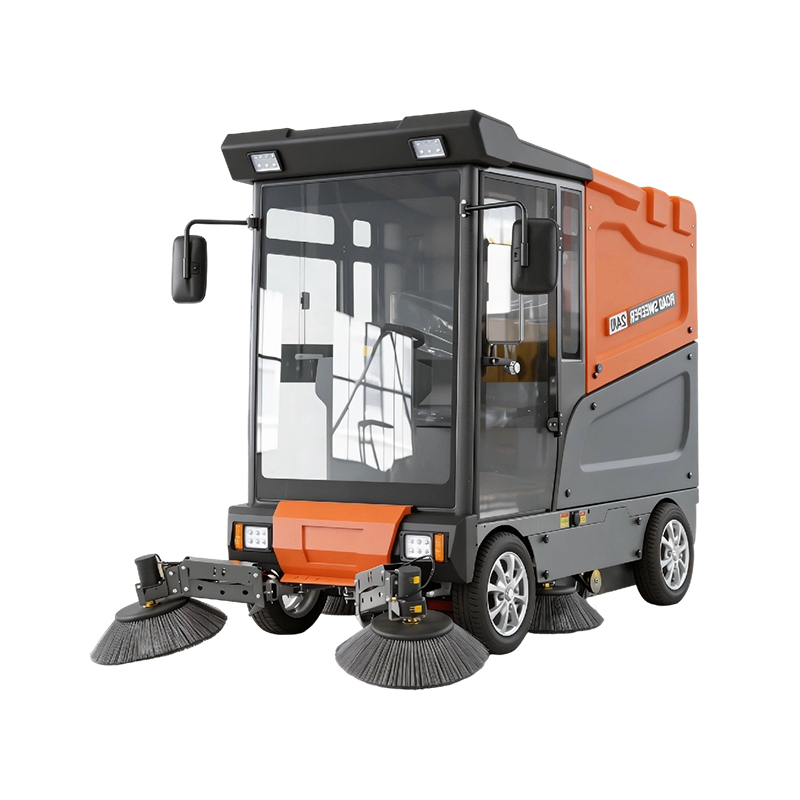
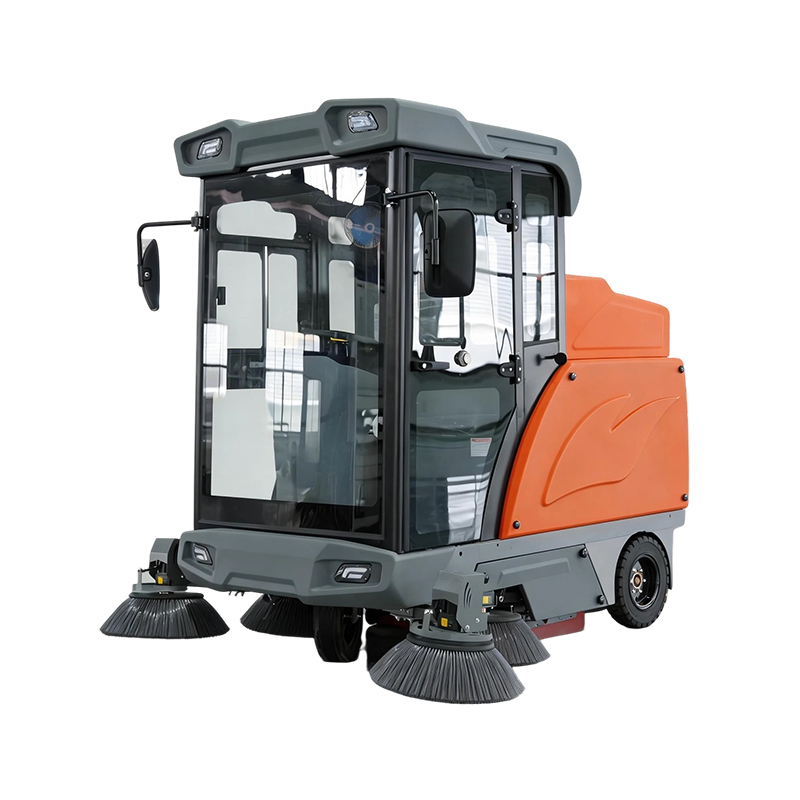
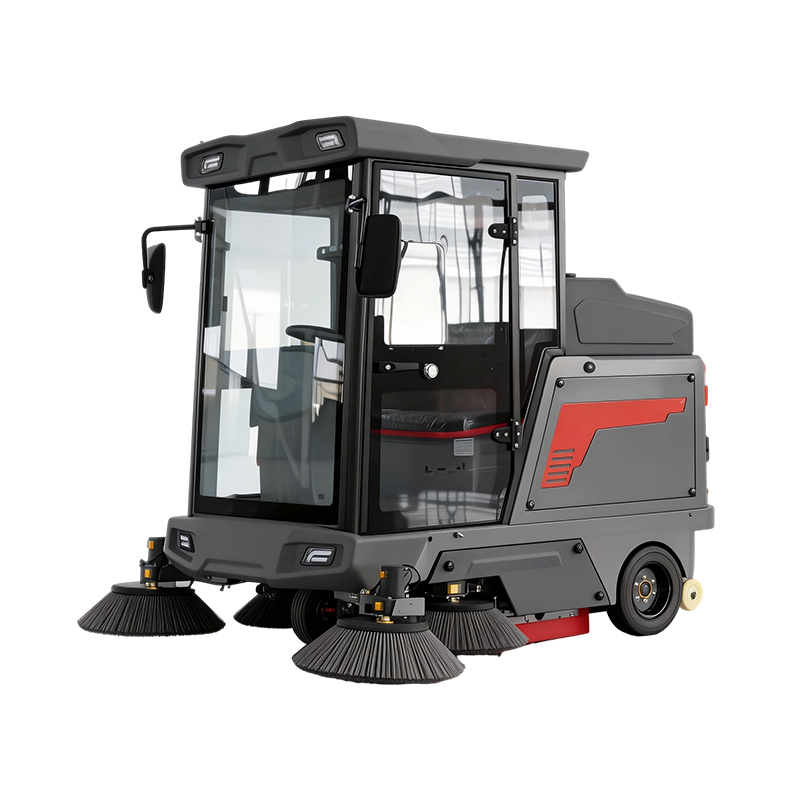
In heavy manufacturing environments—such as steel mills, foundries, and cement plants—the volume and density of waste material demand specialized disposal mechanisms. The integration of high-dump hydraulic technology into an industrial ride on floor sweeper is not merely a convenience feature; it is a critical requirement for maintaining operational safety and debris management efficiency. This analysis explores the mechanical advantages and safety standards of hydraulic hopper systems in industrial settings.
Mechanical Advantage of High-Dump Hydraulic Hoppers in Heavy Industry
The primary function of a high-dump system is to allow the operator to elevate the debris hopper and discharge its contents directly into standard industrial waste containers or dumpsters. This capability fundamentally changes the logistics of facility maintenance.
- 1. Volumetric Efficiency and Payload Management: Heavy metal shavings and industrial grit require a robust lifting assembly. When considering what is the maximum hopper capacity for industrial sweepers, engineers must evaluate the hydraulic cylinder's bore size and pressure rating to ensure it can lift payloads exceeding 400kg without seal failure.
- 2. Elimination of Secondary Handling: Without high-dump technology, operators must manually shovel debris or dump at floor level, necessitating a second cleanup phase. This transition to automated dumping is a primary factor in why heavy manufacturing prefers high-dump floor sweepers over manual-empty alternatives.
- 3. Cycle Time Optimization: A hydraulic system that can reach heights of 1400mm to 1500mm allows for rapid docking with large-scale disposal bins, minimizing the downtime spent away from the cleaning path.
Structural Integrity and Hydraulic Component Standards
The durability of an industrial ride on floor sweeper depends on the materials used in its lifting arms and hydraulic circuits. High-stress environments require components that meet stringent ISO and ASTM standards.
- 1. Lifting Arm Material Composition: Standard arms should be constructed from high-tensile structural steel (such as ASTM A572 Grade 50) to prevent bending under asymmetrical loads. This structural rigidity is essential when comparing manual dump vs hydraulic dump industrial sweepers in terms of long-term fatigue resistance.
- 2. Hydraulic Circuit Safety Valves: To prevent accidental hopper drops, systems must include counter-balance valves or hydraulic pilot-operated check valves. This is a critical safety feature for preventing hopper accidents in ride on sweepers during the discharge cycle.
- 3. Corrosion Resistance of Hydraulic Rods: Chrome-plated piston rods with a minimum salt spray resistance of 96 hours (per ISO 9227) are necessary to withstand the chemical exposure typical of automotive or chemical manufacturing plants.
Environmental Control and Multi-Stage Filtration Integration
Dumping large volumes of dry industrial waste can create massive dust clouds if not managed correctly. The industrial ride on floor sweeper must synchronize its filtration system with the dumping process.
- 1. Vacuum Shutter Mechanisms: Advanced sweepers utilize an automated shutter that closes the vacuum intake during the high-dump sequence. This prevents the "puffing" of fine particulate matter back into the facility air, which is a major concern when evaluating dust control during sweeper hopper dumping.
- 2. Filter Shaker Performance: Before dumping, an electric or hydraulic filter shaker must clear the pleats of the polyester or HEPA filter. This ensures that the industrial ride on floor sweeper filter maintenance intervals are maximized and air quality standards are met.
- 3. PM10 and PM2.5 Compliance: In heavy manufacturing, controlling respirable crystalline silica is mandatory. Technical buyers often ask how to improve air quality with industrial sweepers; the answer lies in the combination of high-dump precision and M-class or H-class filtration media.
Operational ROI and Labor Cost Mitigation
The investment in hydraulic technology is justified through the reduction of labor hours and the mitigation of workplace injury risks associated with heavy lifting.
- 1. Ergonomic Impact and Worker Safety: Manual dumping of heavy hoppers is a leading cause of musculoskeletal strain. High-dump systems allow the operator to remain seated, addressing the ergonomic benefits of hydraulic lift sweepers and reducing potential worker compensation claims.
- 2. Maintenance Access and Serviceability: A high-lift hopper often provides better access to the main brush and internal drivetrain. This is a significant advantage when calculating the total cost of ownership for industrial sweepers, as it slashes the time required for routine brush adjustments or debris removal from the axle.
- 3. Adaptability to Variable Waste Streams: Whether handling fine foundry sand or bulky wooden pallet splinters, the hydraulic dump mechanism provides the force necessary to eject compacted waste that would otherwise stick in a gravity-fed manual hopper. This explains what types of debris require high-dump sweepers in specialized industrial sectors.
Technical Performance Comparison: Dump Systems
The following data compares the physical capabilities of various disposal methods found in industrial cleaning equipment.
| Feature |
Manual Floor Dump |
Hydraulic High-Dump |
| Maximum Discharge Height |
0 mm |
1420 mm - 1550 mm |
| Operator Physical Load |
High (Manual Lift/Tilt) |
Negligible (Joystick Control) |
| Hopper Material Capacity |
Under 150 Liters |
300 - 600+ Liters |
| Dumping Cycle Time |
3 - 5 Minutes |
Under 45 Seconds |
- 1. Interlocking Safety Switches: High-dump units should feature seat sensors and hopper-up speed limiters to prevent the machine from tipping if driven while the hopper is elevated.
- 2. Dual Side-Brush Efficiency: While dumping is the end of the process, the efficiency is started by the side brushes. Why dual side brushes improve sweeper productivity is due to the increased path width, which fills the high-capacity hopper faster and more evenly.
- 3. Hydraulic Oil Cooling: For machines operating in high-ambient temperature foundries, an oil cooler for the hydraulic lift circuit prevents seal hardening and ensures smooth hopper operation.
Technical FAQ
1. What is the standard height for a high-dump industrial ride on floor sweeper?
The industry standard for high-dump clearance is 1475mm, which allows the machine to clear the edge of most global 1100-liter waste containers and standard skips.
2. Can the hydraulic system operate while the sweeper is in motion?
For safety reasons, most engineered systems include a lockout that prevents hopper elevation unless the machine is stationary or moving at a restricted safety speed (typically under 1 km/h).
3. How often does the hydraulic fluid in the dump system need replacement?
In heavy industrial use, a fluid change and filter replacement are recommended every 1000 to 1500 operating hours to prevent valve contamination and pump wear.
4. Does a high-dump system significantly increase the machine's footprint?
While the lift arms add some weight, modern CAD design allows high-dump sweepers to maintain a tight turning radius, often under 2500mm, for navigating narrow factory aisles.
5. What happens if the hydraulic hose fails while the hopper is up?
Standard-compliant sweepers are equipped with "velocity fuses" or check valves directly on the cylinder ports that lock the hopper in place instantly if a pressure drop is detected.
Technical References
- ISO 12100: Safety of machinery — General principles for design — Risk assessment and risk reduction.
- ASTM A572/A572M: Standard Specification for High-Strength Low-Alloy Columbium-Vanadium Structural Steel.
- ANSI B56.1: Safety Standard for Low Lift and High Lift Trucks.



 English
 中文简体
中文简体
 Español