Content
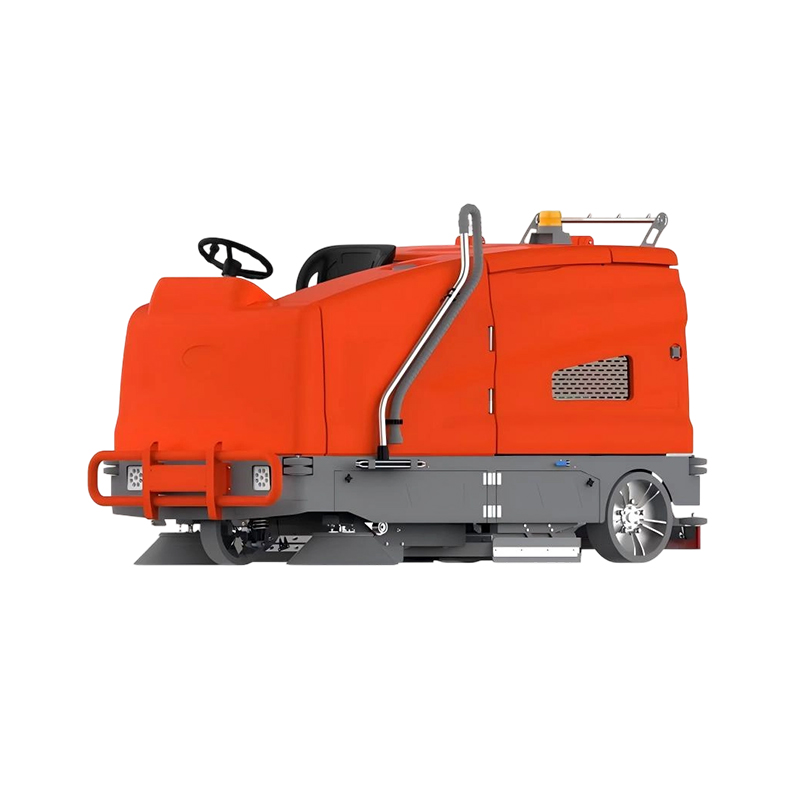
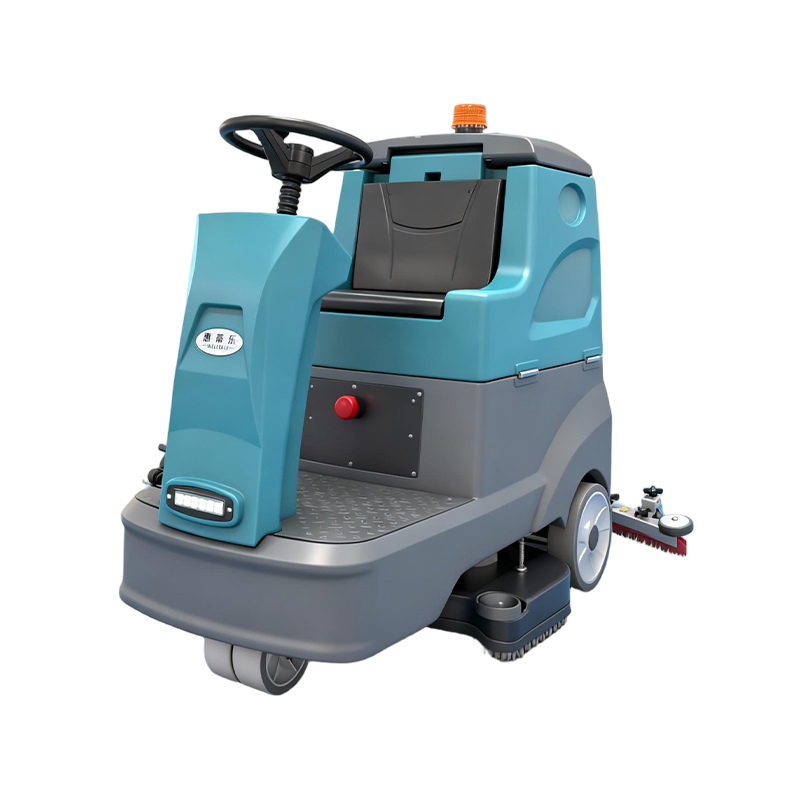
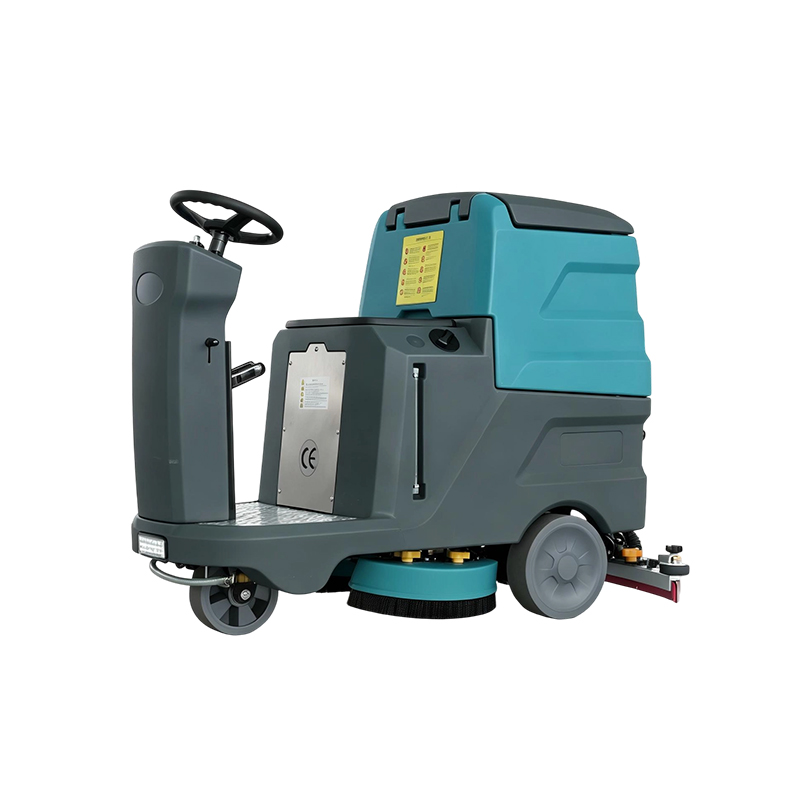
A ride on scrubber machine is a powered floor cleaning unit that carries an operator on board while scrubbing, rinsing, and drying hard floor surfaces in a single pass. Built for facilities with large continuous floor areas, these machines combine a solution tank, scrub deck, and vacuum squeegee system to clean far more square footage per hour than a walk-behind unit, while reducing physical strain on the operator over long shifts.
A ride-on scrubber machine is a self-propelled cleaning unit with an operator seat or standing platform, a solution tank that holds cleaning water, a scrub deck fitted with rotating brushes or pads, and a recovery system that vacuums up dirty water through a squeegee assembly. The combination of scrubbing and immediate water recovery allows a facility to be cleaned and left dry within minutes, rather than requiring separate mopping and drying steps.
These machines are distinguished from walk-behind scrubbers primarily by scale: larger tank capacities, wider scrub decks, and higher travel speeds allow a ride-on unit to cover significantly more floor area per hour, which matters most in facilities with continuous open floor space.
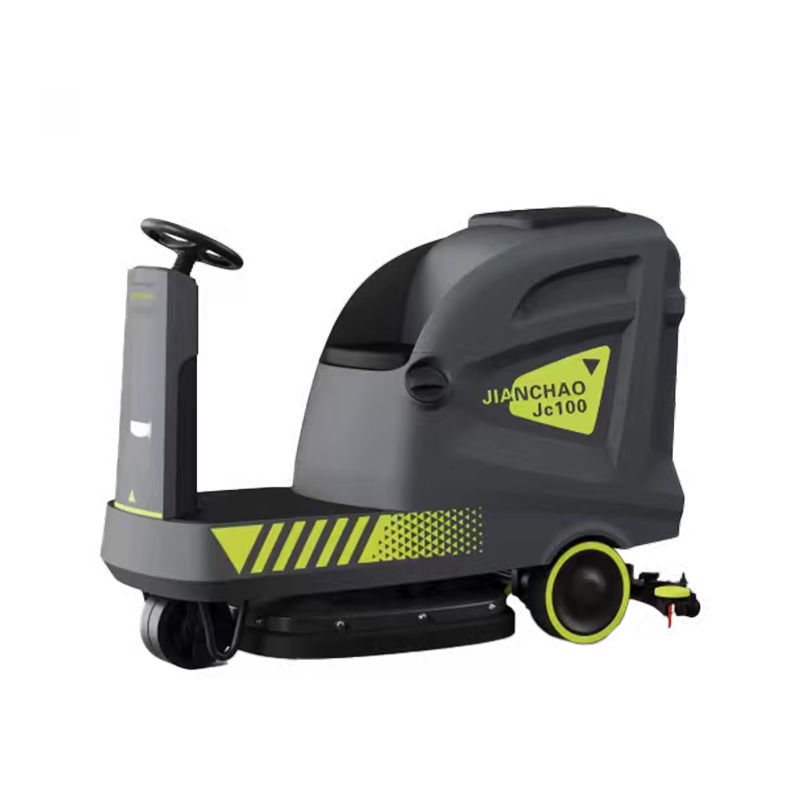
As the machine moves forward, the scrub deck lowers rotating brushes or pads onto the floor while solution is dispensed from the tank ahead of the brushes. The brushes agitate the solution against the floor surface to loosen soil, and a squeegee assembly trailing behind the scrub deck draws the dirty water into a recovery tank using vacuum suction. This sequence, dispense, scrub, recover, happens continuously as the operator drives the unit across the floor.
Most units include adjustable brush pressure and solution flow rate, allowing the operator to match cleaning intensity to floor condition. Battery-powered models draw from an onboard battery pack that powers the drive motor, brush motors, and vacuum motor simultaneously.
Specifications vary by model size, but the following ranges are typical for mid-size to large ride-on units used in industrial and commercial facilities.
| Specification | Typical Range | Relevance |
|---|---|---|
| Scrub path width | 28 to 40 inches | Wider paths cover more floor area per pass, reducing cleaning time |
| Solution tank capacity | 20 to 55 gallons | Determines how much floor area can be cleaned before refilling |
| Recovery tank capacity | Slightly larger than solution tank | Must exceed solution capacity to avoid overflow during operation |
| Travel speed | 4 to 6 mph | Affects productivity across large open floor areas |
| Brush pressure | Adjustable, typically up to 150 lbs | Higher pressure aids heavier soil removal on textured floors |
| Battery voltage | 24V to 36V system | Influences run time and available power for brush and vacuum motors |
| Run time per charge | 2.5 to 4.5 hours | Should be matched against the length of the cleaning shift |
Ride-on scrubbers are fitted with one of two scrub head designs, each suited to different floor conditions.
Disc Scrub Head
Uses flat, rotating pads or brushes that spin parallel to the floor. This design works well on smooth to moderately textured floors and is generally simpler to maintain, with pad changes requiring less time than brush replacement on cylindrical heads.
Cylindrical Scrub Head
Uses two counter-rotating cylindrical brushes that sweep debris toward the center of the machine ahead of scrubbing. This design performs better on uneven or heavily textured floors and can pick up larger debris without a separate sweeping pass.
Deciding between a walk-behind and a ride-on unit depends primarily on the size of the floor area being cleaned and the frequency of cleaning required.
| Factor | Walk-Behind Scrubber | Ride-On Scrubber Machine |
|---|---|---|
| Typical floor area | Under 50,000 square feet per shift | 50,000 square feet and above per shift |
| Operator fatigue | Higher over long shifts due to walking distance | Lower, since the operator rides rather than walks |
| Maneuverability | Better in tight aisles and confined spaces | Requires wider aisles and turning space |
| Tank capacity | Smaller, more frequent refilling | Larger, fewer interruptions during a shift |
| Initial cost | Lower | Higher, offset by productivity on large floor areas |
Ride-on scrubber machines are used wherever continuous, large-scale hard floor cleaning is a routine operational requirement.
Choosing the right ride on scrubber machine involves matching the unit's specifications to the physical layout and cleaning demands of the facility rather than selecting based on tank size or price alone.
Run time per charge typically ranges from 2.5 to 4.5 hours depending on battery voltage, brush motor load, and vacuum motor usage. Facilities running multiple shifts often plan for either a battery swap between shifts or scheduled charging during breaks to avoid interrupting cleaning operations. Battery life over the long term is affected by charging habits, with deep discharges and inconsistent charging schedules generally shortening overall battery service life compared with following the manufacturer's recommended charging routine.
Why is my scrubber leaving streaks of water behind?
Streaking is most often caused by worn or damaged squeegee blades that no longer maintain full contact with the floor, or by a clogged vacuum hose reducing recovery suction. Debris caught under the squeegee assembly can also create gaps that allow water to pass. Inspecting and cleaning the squeegee assembly is typically the first troubleshooting step.
Can a ride-on scrubber be used on carpeted surfaces?
Standard ride-on scrubbers are designed for hard floor surfaces and are not suited to carpet, since the scrub and recovery system is built around hard flooring characteristics. Carpeted areas generally require a separate carpet extraction machine designed for that surface type.
What is the average lifespan of a professional-grade scrubber?
With regular maintenance, a professional-grade ride-on scrubber commonly remains in service for 7 to 10 years, though actual lifespan depends heavily on daily operating hours, floor conditions, and how consistently scheduled maintenance is followed.
Daily maintenance should include rinsing the solution and recovery tanks, inspecting squeegee blades for wear or damage, and clearing debris from brushes or pads before storage. Vacuum hoses and filters should be checked periodically for clogs, since restricted airflow reduces water recovery and contributes to streaking. Battery terminals should be kept clean and dry, and charging should follow the schedule specified by the manufacturer to preserve battery capacity over time.
Brush or pad wear should be checked regularly, since worn scrub media reduces cleaning effectiveness even when solution flow and pressure settings remain correct. A basic maintenance log helps track squeegee replacements, battery service, and brush wear over the machine's operating life.
A ride on scrubber machine is most effective when its scrub path width, tank capacity, battery run time, and scrub head type are matched to the specific floor area, surface texture, and shift length of the facility using it. Consistent maintenance of the squeegee assembly, recovery system, and battery, combined with attention to aisle and turning clearance during selection, supports reliable cleaning performance and a longer operating life for the machine.
What is the difference between a disc and a cylindrical scrub head?
A disc scrub head uses flat rotating pads suited to smooth to moderately textured floors, while a cylindrical scrub head uses two counter-rotating brushes that perform better on uneven or heavily textured surfaces and can sweep larger debris ahead of scrubbing.
Do I need a special license to operate a ride-on floor scrubber?
A government driving license is not typically required, but many workplaces require operator-specific training and a documented competency check before an employee is authorized to operate the machine.
How long do the batteries last on a single charge?
Most ride-on scrubbers run for 2.5 to 4.5 hours per charge depending on battery voltage and how heavily the brush and vacuum motors are used during operation.
What size facility justifies a ride-on scrubber over a walk-behind model?
Facilities cleaning roughly 50,000 square feet or more per shift generally see a productivity benefit from a ride-on unit, while smaller or more confined spaces are often better served by a walk-behind scrubber.
How often should scrubber squeegee blades be replaced?
Replacement frequency depends on usage, but blades should be inspected regularly and replaced as soon as streaking appears, since continuing to operate with worn blades reduces water recovery efficiency.

Contact Information
Xiaopu Langshan Industrial Park, Changxing County, Zhejiang Province, China
Keep in Touch
Can't find the answer you're looking for? Please chat to our friendly team.


 English
 中文简体
中文简体
 Español