Content
Cleaning Equipment Explained
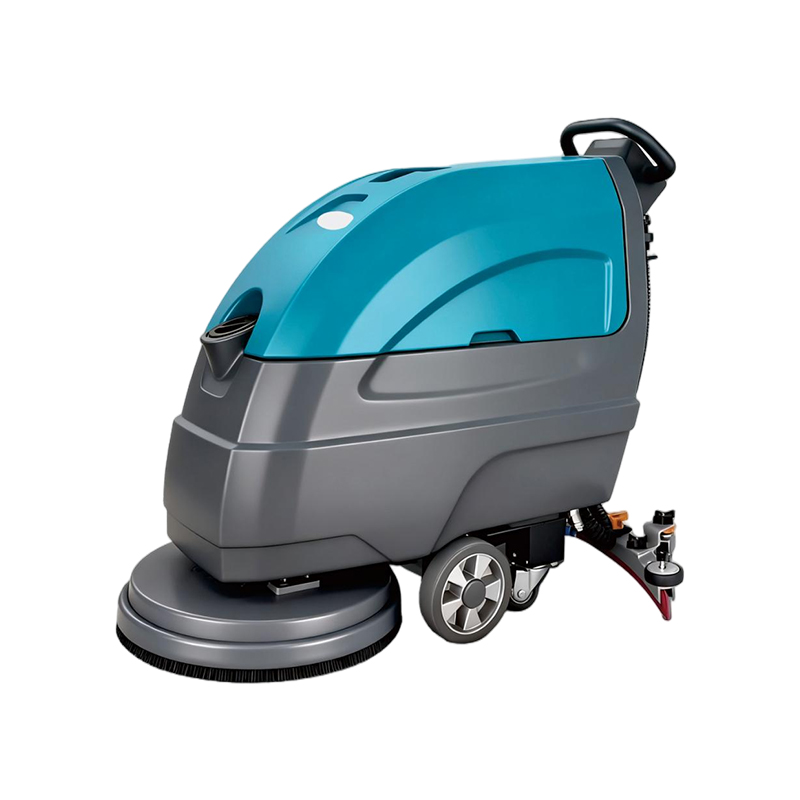
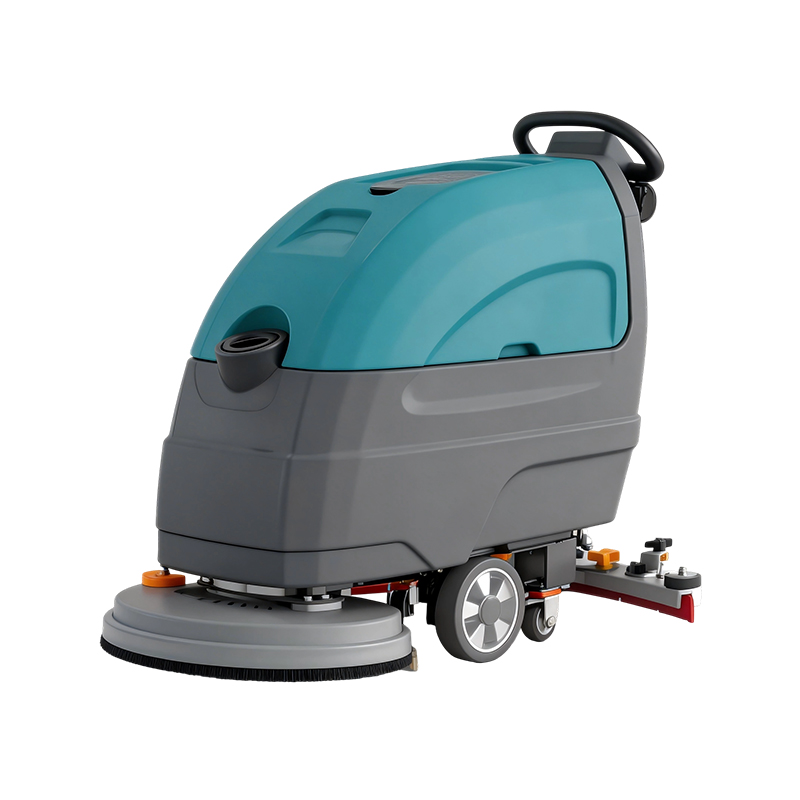
A walk behind cleaning machine, more commonly called a walk-behind floor scrubber, is a piece of equipment that cleans hard floors by combining three actions a mop alone cannot do at the same time: applying cleaning solution, scrubbing the floor with a rotating brush or pad, and immediately vacuuming the dirty water back up before it has a chance to spread or dry on the surface. The operator walks behind the machine and steers it much like pushing a lawnmower, which is where the name comes from. Because all three actions happen in one continuous pass rather than as separate steps, a floor that would normally take a mop, a bucket, and several minutes of drying time to clean can instead be finished and safely walkable again in a fraction of that time.
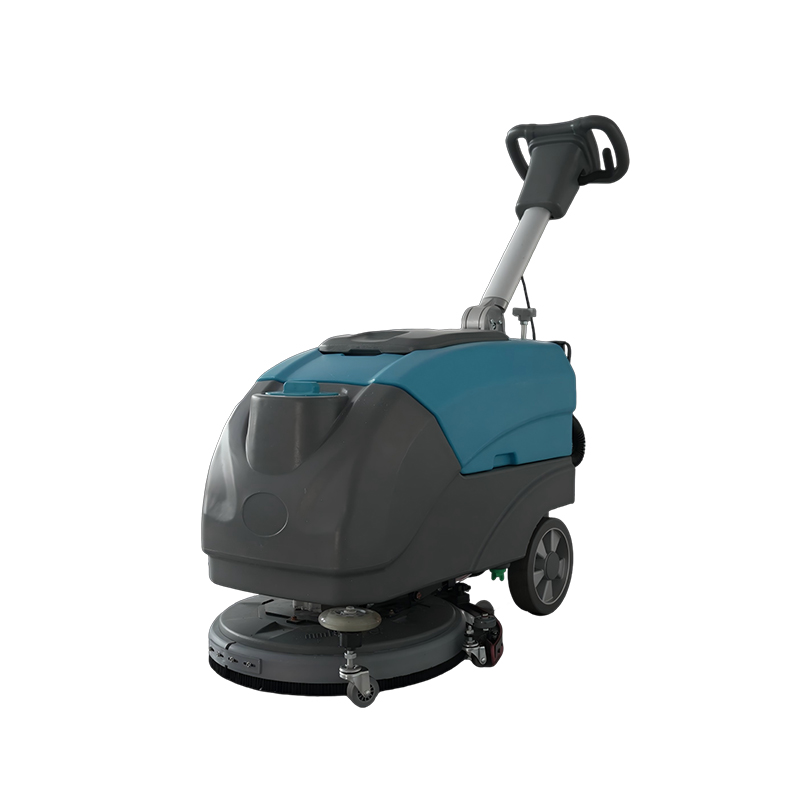
These machines come in a range of sizes, from compact units narrow enough to fit through a standard doorway and clean a small office or retail aisle, up to wider industrial models built to cover large warehouse floors efficiently. What stays consistent across that entire size range is the basic working principle: solution goes down, a brush works it into the floor, and a vacuum system pulls the resulting dirty water back up immediately afterward.
Unlike a ride-on scrubber, which carries the operator on a small platform or seat, a walk behind cleaning machine is guided entirely on foot. This makes it smaller, easier to maneuver around furniture and tight aisles, and generally more affordable, which is why it remains the most common type of scrubber found in retail stores, schools, and small to mid-sized facilities.
What It Does
Applies solution, scrubs, and recovers water in one pass
How It Moves
Guided on foot by an operator walking behind it
Where It's Used
Retail floors, schools, warehouses, gyms, and food service areas
Underneath its simple appearance, a floor scrubber runs three systems at once, and understanding each one makes the rest of the machine, and its occasional problems, much easier to understand.
The first system is the solution delivery system. A tank holds a mix of water and, in most cases, a small amount of floor cleaning solution. As the machine moves forward, this liquid is released through a valve onto the floor just ahead of the brush, in a controlled flow rather than a constant flood. The second system is the scrubbing mechanism itself: a motor spins a brush or a pad against the floor, physically loosening dirt, grease, and grime the same way scrubbing by hand would, only with far more consistent pressure and speed. The third system is recovery. Directly behind the brush, a rubber blade called a squeegee draws the dirty water into a narrow channel, where a vacuum motor pulls it up into a separate recovery tank, leaving the floor clean and only lightly damp rather than soaked.
A simplified layout of a walk-behind scrubber: solution flows down ahead of the brush, and the squeegee pulls dirty water back into the recovery tank.
Scrubbing heads generally come in two shapes, and the difference matters for how a machine handles different types of dirt. A disc brush spins flat against the floor like a record turntable, which works well on smooth, evenly soiled surfaces. A cylindrical brush, by contrast, rotates around a horizontal axis and tends to throw debris slightly forward as it turns, which can be more effective on uneven surfaces or floors with grooves and seams where dirt tends to collect. Pads, which are softer and flatter than brushes, are typically used in place of a brush when the floor finish is delicate or when the goal is a gentle clean rather than aggressive scrubbing of heavy grime.
Every walk-behind scrubber, regardless of size or brand, is built from the same core set of parts. Knowing what each part of a walk behind cleaning machine does makes it far easier to operate correctly and to recognize what might be wrong when something stops working as expected.
| Component | What It Does |
|---|---|
| Solution Tank | Holds the water and cleaning solution mixture that is released onto the floor during cleaning. |
| Recovery Tank | Collects the dirty water pulled up by the vacuum system so it can be emptied separately from clean solution. |
| Scrub Brush or Pad | Rotates against the floor to physically loosen dirt, grease, and buildup. |
| Squeegee | A rubber blade that channels dirty water toward the vacuum inlet so the floor is left only lightly damp. |
| Vacuum Motor | Creates suction that pulls the dirty water off the floor and into the recovery tank. |
| Control Handle | Where the operator steers the machine and typically finds the power switch, solution flow control, and brush pressure adjustment. |
| Drive Wheels | Support the machine's weight and, on self-propelled models, move the unit forward without the operator pushing it. |
Walk-behind scrubbers are common enough that most people walk across one's freshly cleaned floor without ever noticing the machine itself. In grocery and retail stores, they run through aisles during off-peak hours or overnight to clear away spills and everyday grime before the next day's foot traffic. In schools, gyms, and recreation centers, they handle large gymnasium floors and hallway stretches where a mop and bucket would take far longer to cover the same area. Hospitals and other healthcare facilities rely on them for hygiene-sensitive hallways and waiting areas, where fast drying time reduces slip hazards for patients and staff moving through the space. In warehouses and light manufacturing facilities, scrubbers clear away dust, oil residue, and general debris from concrete floors, which helps maintain both cleanliness and traction for foot and equipment traffic. Restaurants and food service areas use them in kitchens and dining floors where grease buildup is a constant, recurring issue that a simple mop struggles to fully lift.
This is one of the questions people ask most often, and the honest answer is that it depends on the finish of the wood and the settings used on the machine, since not every wood floor is treated or sealed the same way. Sealed hardwood floors with an intact protective finish can generally tolerate light scrubbing with a soft pad and a reduced water flow, since the sealant is designed to resist moisture for short periods. Unsealed or worn wood, however, can absorb water quickly, leading to swelling, warping, or discoloration, so scrubbing should be avoided entirely until the finish is repaired. Regardless of the floor's condition, the safest approach on wood is always to use the lowest effective water output, a soft, non-abrasive pad rather than a stiff scrubbing brush, and to make sure the squeegee is working properly so that no standing water is left behind after each pass.
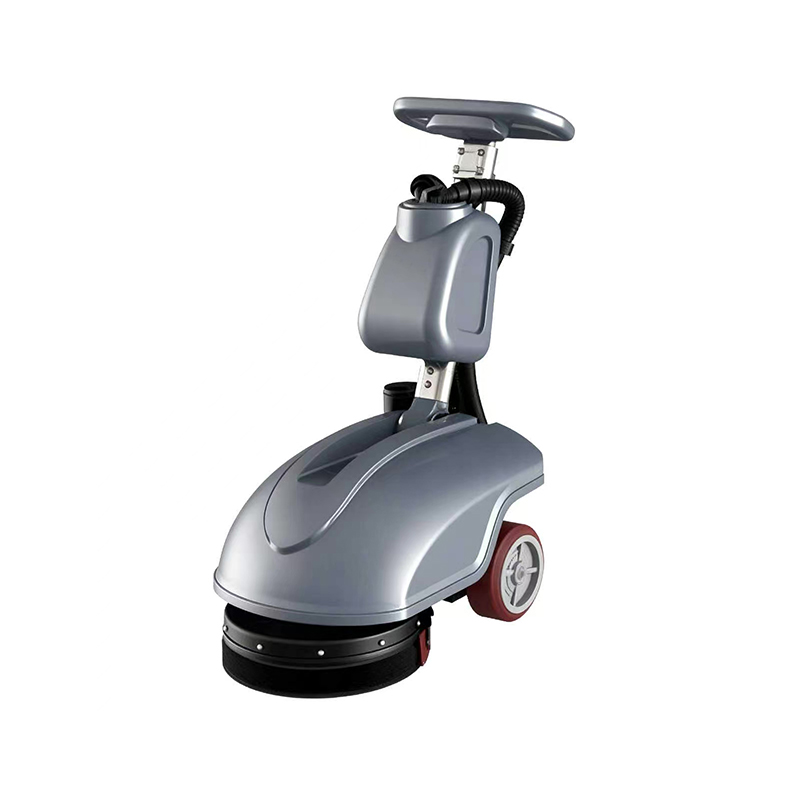
Most problems people run into with a floor scrubber come from skipping preparation rather than from the machine itself. Working through these five steps before switching the machine on takes only a few minutes and prevents the majority of common issues.
Clear and Inspect Your Work Area
Remove loose debris, cords, or large obstacles from the floor, and check for any cracks or damaged tiles that the machine should avoid.
Place Safety Signage
Set out wet floor signs at both ends of the area, since the surface will remain slightly damp during and immediately after cleaning.
Inspect Your Machine
Check the brush or pad for wear, confirm the squeegee blade is not cracked or torn, and make sure the recovery tank is empty before starting.
Fill the Solution Tank Correctly
Add water first, then the recommended amount of cleaning solution, avoiding overfilling so the tank does not overflow once the machine is moving.
Select the Right Brush or Pad
Match the brush stiffness or pad type to the floor material, a soft pad for delicate or polished surfaces, a firmer brush for heavily soiled industrial flooring.
Once preparation is complete, operating the machine itself follows a fairly consistent pattern across most models. The operator switches on the solution flow and the brush motor together, then begins walking forward at a steady, even pace, since moving too quickly leaves less contact time between the brush and the floor. Overlapping each pass slightly with the one before it prevents thin, unscrubbed strips from being left behind. The squeegee and vacuum system should be running throughout, not just at the end of the job, so that dirty water never has the chance to sit on the floor or spread outside the cleaning path. When the solution tank runs low or the recovery tank fills up, both should be addressed immediately, continuing to scrub with an empty solution tank or a full recovery tank causes the problems covered in the next section. Once the pass is finished, both tanks should be emptied and rinsed before storage, since leftover solution or dirty water left sitting inside the machine can leave odors or residue that affect the next cleaning session.
A handful of issues account for most of the calls made about a scrubber "not working properly," and nearly all of them trace back to one of the core systems described earlier rather than a fault with the machine as a whole. Working through the table below before assuming a part needs replacing often saves both time and unnecessary repair costs, since many of these issues are resolved with a quick check rather than a service call.
| Problem | Likely Explanation |
|---|---|
| Machine is not putting out water | The solution tank may be empty, the flow valve may be closed, or a solution line may be blocked or kinked. |
| Floor still looks dirty after a pass | The brush or pad may be worn down, the wrong pad type may be in use for the soil level, or the machine was moved too quickly for the brush to do its job. |
| Water is left behind on the floor | The squeegee blade may be worn, cracked, or improperly adjusted, preventing it from making full contact with the floor. |
| Recovery tank fills too quickly | Too much solution flow is being applied relative to what the floor needs, so reducing the flow rate usually resolves this. |
| Machine feels harder to push | Brush pressure may be set higher than necessary, or debris may be caught underneath the brush housing. |
On the question of soap specifically: yes, a small, measured amount of cleaning solution is meant to go into the solution tank along with water, but more is not better. Using too much solution creates excess suds, which can overwhelm the vacuum recovery system, leave a sticky residue behind once the floor dries, and cause the recovery tank to fill unusually fast. Following the dilution ratio printed on the solution container is the simplest way to avoid this.
Compared with mopping by hand, a walk-behind scrubber offers a few clear practical advantages. Because scrubbing, applying solution, and recovering dirty water all happen in a single pass, floors are ready to walk on again far sooner than after traditional mop-and-bucket cleaning, where water is spread across the floor and left to air dry. The consistent brush pressure and speed also produce a more even clean across a large area than manual scrubbing, which naturally varies with how tired an operator's arm becomes over the course of a shift. Because dirty water is contained in a separate recovery tank rather than reused from a mop bucket, the cleaning solution stays cleaner throughout the job as well, rather than spreading dirt from one section of floor to the next.
There is also a time and coverage advantage that becomes more noticeable as the floor area grows larger. A single operator pushing a scrubber can typically cover several times the floor area in the same amount of time it would take to mop the same space by hand, since the machine handles both the scrubbing motion and the water pickup automatically rather than requiring the operator to repeatedly wring out and reload a mop head. For facilities with large, continuous floor areas, this efficiency difference adds up meaningfully over a week or a month of regular cleaning.
"Scrubber," "mop," and "buffer" are sometimes used loosely, but each performs a different job. The table below lines up the key differences.
| Method | How It Cleans | Best Suited For |
|---|---|---|
| Walk-Behind Scrubber | Applies solution, scrubs, and vacuums dirty water in one pass | Regular cleaning of medium to large hard-floor areas |
| Mop and Bucket | Manually applies solution and wipes with a cloth head | Small areas, spot cleaning, or spaces a machine cannot reach |
| Floor Buffer | Spins a pad to polish or restore shine without adding water | Maintaining or restoring gloss on an already clean floor |
| Ride-On Scrubber | Same scrub-and-recover process as a walk-behind unit, operated from a seated platform | Very large open floor areas where walking the full distance is impractical |
Mechanical floor scrubbing dates back to early rotary buffing machines developed for polishing floors in the first half of the twentieth century. Those early machines could spin a brush, but they had no way to apply or recover liquid, so operators still needed a separate mop and bucket to actually clean rather than just polish. The combination of a spinning brush, a solution tank, and a vacuum recovery system into one unit became practical once compact electric motors and reliable rubber squeegee blades were widely available, allowing a single machine to do what previously required several separate tools and several passes across the same floor. That combined design is essentially what a walk behind cleaning machine still looks like today, refined mainly through better batteries, quieter motors, and more precise control over water flow rather than any change to the basic concept.
As battery technology improved through the following decades, corded electric scrubbers gradually gave way to battery-powered models in many settings, removing the need to work around a power cord and outlet placement while cleaning. This shift also made it more practical to build wider machines with larger tanks, since a cordless unit is not limited by how far a cable can reach across an open floor.
A few misunderstandings come up repeatedly. One is that a floor scrubber leaves floors soaking wet, when in fact a properly functioning machine leaves a surface only lightly damp, since the squeegee and vacuum system are designed to remove the vast majority of the liquid immediately. Another is that any cleaning chemical can be poured into the solution tank, when in reality using the wrong type of detergent can create excess foam that damages the vacuum motor or clogs the recovery system over time. A third misconception is that a bigger tank always means better cleaning, when tank size mainly affects how long the machine can run before it needs refilling or emptying, not how thoroughly it scrubs. A fourth misconception is that these machines require specialized training to operate safely, when in practice the controls are generally limited to a power switch, a solution flow adjustment, and steering, with most of the learning curve involving good habits like proper preparation rather than complicated mechanical skill. Recognizing these misconceptions ahead of time also helps set realistic expectations for what the machine can and cannot do on any given floor.
A walk-behind floor scrubber combines three ordinary cleaning actions, applying solution, scrubbing, and recovering dirty water, into one steady, single-pass process guided on foot. Understanding its core components, following a short pre-operation routine, and matching the brush, pad, and solution flow to the floor being cleaned accounts for nearly all the difference between a machine that performs well and one that seems to cause constant problems. With that basic understanding in place, most day-to-day questions about operation, maintenance, and troubleshooting become far less confusing than they first appear.
Q1What is a walk behind floor scrubber?
It is a machine guided on foot that applies cleaning solution, scrubs the floor with a rotating brush or pad, and vacuums up the dirty water in a single pass.
Q2How do you use a walk behind scrubber?
Prepare the area, fill the solution tank, select the right brush or pad, then walk the machine forward at a steady pace with slightly overlapping passes.
Q3Can you use a walk behind scrubber on a wooden floor?
Sealed hardwood can often tolerate light scrubbing with a soft pad and reduced water flow, but unsealed or worn wood should not be scrubbed until the finish is repaired.
Q4What are the common problems with floor scrubbers?
The most frequent issues involve no water output, streaking or residue left behind, and water not being fully recovered, usually traced to the tank, valve, or squeegee.
Q5What are the benefits of using a floor scrubber?
Floors dry faster, cleaning pressure stays consistent across the whole area, and dirty water is kept separate from clean solution throughout the job.
Q6Why is my floor scrubber machine not putting out water?
This is usually caused by an empty solution tank, a closed flow valve, or a blocked solution line, and checking these three points resolves most cases.
Q7Do you put soap in a floor scrubber?
Yes, a measured amount of cleaning solution is added to the water in the solution tank, but using more than the recommended amount can create excess foam and residue.
Q8How do you properly use a floor scrubber?
Prepare the machine and area first, then keep the solution flow, brush, and vacuum recovery all running together throughout the pass rather than only at certain points.

Contact Information
Xiaopu Langshan Industrial Park, Changxing County, Zhejiang Province, China
Keep in Touch
Can't find the answer you're looking for? Please chat to our friendly team.


 English
 中文简体
中文简体
 Español