Content
Commercial and industrial facilities require efficient floor maintenance equipment to maintain hygiene standards and operational safety. A hand push floor scrubber provides the engineered solution that businesses need to clean hard floor surfaces effectively while minimizing labor costs and water consumption. Understanding the technical specifications, power configurations, and selection criteria helps procurement teams specify equipment that aligns with their facility size, floor conditions, and productivity requirements.
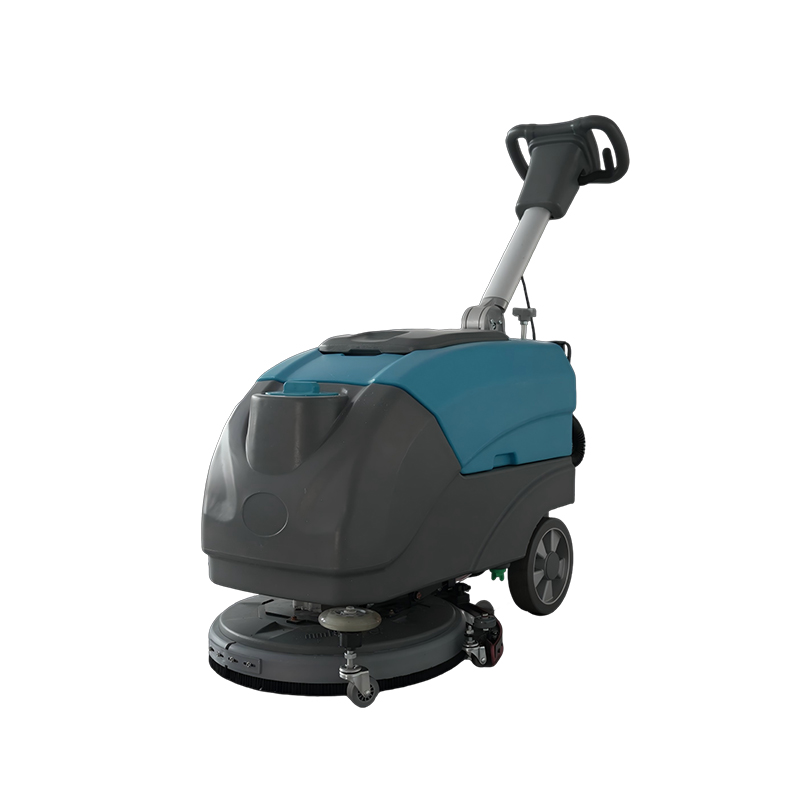
A hand push floor scrubber is a compact cleaning machine that an operator propels and guides through the cleaning path on foot. These units integrate three core functions: solution dispensing, mechanical scrubbing via rotating brushes or pads, and immediate wastewater recovery through vacuum squeegee systems. This combination enables a single-pass scrub-and-dry operation that removes dirt and contaminants rather than spreading them across the floor surface.
The operating principle relies on a brush drive motor rotating cleaning heads at speeds typically ranging from 180 to 2100 RPM , depending on the model. Solution tanks dispense cleaning fluid onto the floor ahead of the brush path. The brushes agitate and suspend soil from the floor surface. A rear-mounted squeegee assembly then recovers the dirty solution into a recovery tank, leaving the floor dry and ready for immediate traffic.
Key design features include adjustable brush pressure systems, floating squeegee assemblies that maintain contact across uneven floors, and ergonomic handle designs that reduce operator fatigue during extended use.
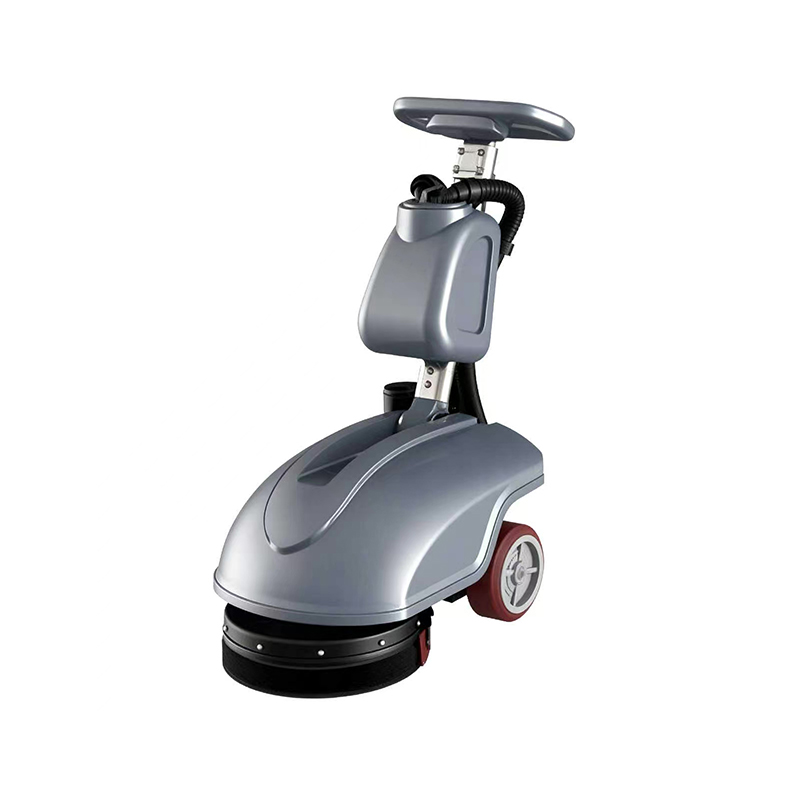
Multiple sectors depend on hand push floor scrubber systems for daily maintenance:
These machines prove particularly valuable in facilities under 20,000 square feet where larger ride-on units would be impractical or where narrow aisles and obstacles restrict machine access.
Floor scrubber cleaning width capacity directly determines productivity and operational efficiency. Compact models designed for tight spaces feature cleaning paths as narrow as 12 to 17 inches (300 to 430 mm). These units suit small retail spaces, restaurant kitchens, and congested areas where maneuverability takes priority over coverage speed.
Mid-range hand push floor scrubber models offer 20-inch (500 mm) cleaning paths that balance coverage with agility. These represent the most versatile configuration, handling medium-sized areas while navigating around obstacles effectively .
Large walk-behind units extend cleaning width to 28 to 34 inches (700 to 860 mm) for maximum productivity in open areas. These machines can clean up to 35,000 square feet per hour, approaching the productivity of smaller ride-on units while maintaining the flexibility of walk-behind operation .
Floor scrubber specifications, brush pressure rating, and determine soil removal effectiveness on different floor types. Standard units provide brush pressure ranging from 22 kg to 30 kg (48 to 66 pounds) applied to the floor surface. Higher pressure improves cleaning performance on textured or heavily soiled floors but may damage delicate surfaces.
Brush rotational speed affects cleaning aggressiveness and productivity. Standard models operate at 180 to 200 RPM for general maintenance cleaning. High-speed units reaching 2100 RPM provide more aggressive scrubbing action for restoration cleaning or removing stubborn soils
The following table presents floor scrubber cleaning width capacity specifications across different model classes:
| Model Class | Cleaning Width | Productivity Range | Brush Pressure | Primary Applications |
|---|---|---|---|---|
| Compact | 12-17 inches (300-430mm) | 1,500-2,500 ft²/hr | 20-25 kg | Small retail, restaurants, tight spaces |
| Standard | 20 inches (500mm) | 2,500-4,000 ft²/hr | 22-30 kg | Medium facilities, offices, clinics |
| Wide Path | 28 inches (700mm) | 4,000-6,000 ft²/hr | 25-35 kg | Warehouses, large retail, gyand ms |
| Extra Wide | 34 inches (860mm) | 6,000-8,000 ft²/hr | 30-40 kg | Large open areas, industrial floors |
Hand push floor scrubber battery-operated models dominate commercial applications due to operational flexibility and safety. These units typically utilize 24V DC electrical systems powered by either traditional wet-cell lead-acid batteries or advanced lithium-ion configurations.
Battery capacity directly affects runtime and cleaning range. Standard configurations use 100 Ah batteries providing 1.5 to 3 hours of continuous operation. Larger units incorporate 200 Ah battery systems, extending runtime to 4 hours or more, enabling coverage of 15,000 to 35,000 square feet per charge
Lithium-ion technology offers significant advantages over traditional lead-acid batteries. These batteries charge faster, maintain consistent power output throughout the discharge cycle, and provide longer service life with reduced maintenance requirements. The higher energy density of lithium cells also reduces overall machine weight, improving maneuverability .
Runtime calculations must account for actual cleaning time versus transport and tank servicing intervals. A typical hand push floor scrubber battery-operated unit with 100 Ah batteries delivers approximately 1.5 hours of continuous scrubbing time. This translates to effective cleaning of 2,000 to 4,000 square feet, depending on soil levels and operator efficiency
Charging systems range from standard onboard chargers requiring 8 to 12 hours for full recharge to fast-charge configurations that restore 80% capacity within 2 to 3 hours. Facilities with continuous cleaning requirements often maintain spare battery sets or multiple machines to ensure uninterrupted operations.
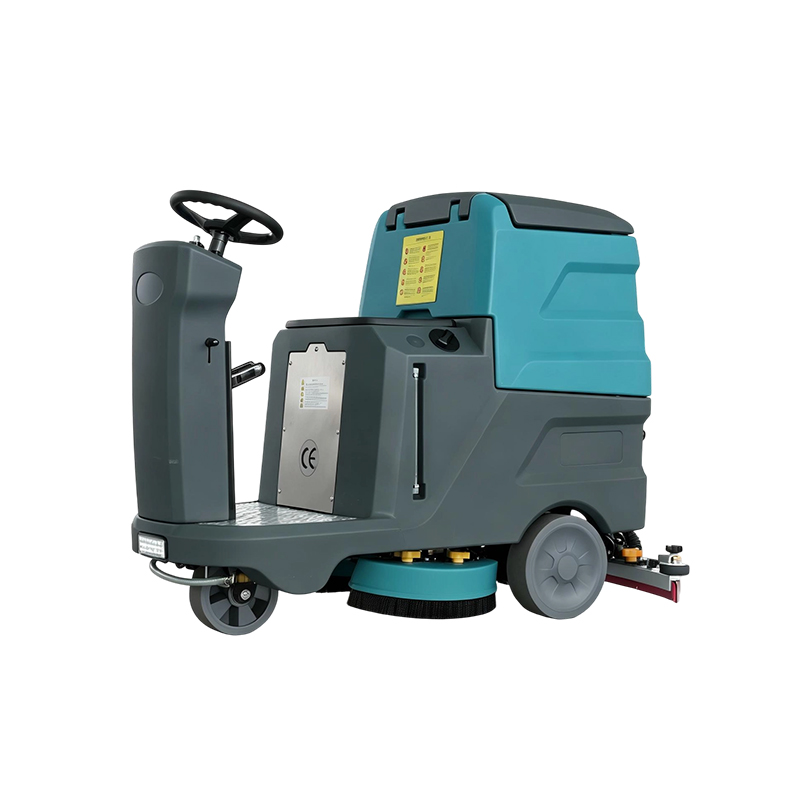
The walk-behind floor scrubber vs ride on decision depends primarily on facility size and cleaning frequency. Walk-behind scrubbers suit facilities under 20,000 square feet, where their compact size and maneuverability provide operational advantages. These machines navigate narrow aisles, work around obstacles, and clean congested areas that larger units cannot access
Ride-on scrubbers become economically justified at facility sizes exceeding 30,000 to 50,000 square feet. These machines cover three to four times the square footage per hour compared to walk-behind units, with productivity reaching 64,500 square feet per hour for large industrial models. The productivity advantage translates directly into labor cost savings that offset higher capital investment.
Walk-behind units excel in environments with narrow racking aisles, frequent obstacles, or irregular floor layouts. The operator maintains close control and can maneuver precisely around equipment, furniture, and architectural features. This precision proves essential in food processing facilities, hospitals, and retail environments where thorough cleaning around fixed objects is mandatory
Operator fatigue represents a significant consideration for facilities with extensive cleaning requirements. Walk-behind operation requires continuous walking and machine guidance, creating physical demands during long shifts. Ride-on units eliminate this fatigue factor, enabling consistent cleaning quality across extended periods.
The following table provides a detailed comparison of wwalk-behindfloor scrubber vs ride on characteristics:
| Characteristic | Walk Behind Scrubber | Ride On Scrubber |
|---|---|---|
| Optimal Facility Size | Under 20,000 sq ft | 30,000+ sq ft |
| Productivity Range | 1,500-8,000 ft²/hr | 10,000-64,500 ft²/hr |
| Cleaning Path Width | 12-34 inches | 24-40+ inches |
| Maneuverability | Excellent in tight spaces | Limited, requires open areas |
| Operator Fatigue | Higher on large routes | Minimal, seated operation |
| Initial Capital Cost | Lower entry point | 2-3x higher investment |
| Aisle Compatibility | Narrow aisles under 4 feet | Requires 6+ foot aisles |
| Tank Capacity | 13-30 gallons typical | 40-100+ gallons |
| Training Requirements | Minimal, intuitive operation | More extensive training is needed |
| Maintenance Complexity | Simpler mechanical systems | More complex drive systems |
Hand push floor scrubber industrial applications in manufacturing facilities address unique challenges, including oil contamination, chemical spills, and heavy soil loads. Industrial-grade units feature corrosion-resistant components, sealed electrical systems, and robust construction to withstand harshenvironmentst.
Warehouses and distribution centers benefit from wide-path walk-behind units that clean aisle ways efficiently while navigating around racking and inventory. Battery operation eliminates cord hazards and allows cleaning during operational hours. Large tank capacities reduce filling and emptying frequency, maximizing productive cleaning time.
Healthcare facilities require hand-push floor scrubber units that support infection control protocols. Low-noise operation (under 70 dB) enables cleaning during patient care hours without disruption. Effective solution recovery prevents slip hazards and maintains dry floors critical for patient safety.
Commercial facilities, including retail stores, schools, and office buildings,s prioritize maneuverability and ease of use. Compact units with intuitive controls allow rapid operator training and consistent cleaning results across multiple shifts. Quiet operation supports daytime cleaning programs that reduce after-hours labor costs
Procurement decisions should evaluate totalotal cost of ownership rather than the initial purchase price alone. Hand push floor scrubber operating costs include battery replacement every 2 to 5 years, depending on chemistry, brush and squeegee blade replacement, and routine maintenance. Labor costs typically represent the largest component of total ownership cost, making productivity specifications critical to financial analysis
Lithium-ion battery systems command higher initial investment but deliver lower lifecycle costs through extended service life, reduced maintenance, and faster charging that improves equipment utilization. Facilities with intensive cleaning requirements should evaluate lithium options despite premium pricing.
Reliable maintenance support ensures equipment availability and extends service life. Procurement specifications should address parts availability, service technician training, and warranty coverage. Standard warranties range from 6 months to 2 years, depending on manufacturer and component category.
Preventive maintenance requirements include daily tank cleaning, brush inspection, squeegee blade condition checks, and battery maintenance for lead-acid systems. Simplified designs with tool-free brush replacement and accessible components reduce maintenance time and labor costs.
A hand push floor scrubber typically cleans between 1,500 and 8,000 square feet per hour, depending on cleaning width and model specifications. Compact 12-17 inch units handle 1,500-2,500 ft²/hr suitable for small spaces. Standard 20-inch models achieve 2,500-4,000 ft²/hr for medium facilities. Wide 28-34 inch units reach 6,000-8,000 ft²/hr approaching ride-on productivity while maintaining walk-behind maneuverability.
Walk behind floor scrubber vs ride on comparisons show walk-behind units excel in facilities under 20,000 square feet with narrow aisles or obstacles. They offer lower capital cost, excellent maneuverability, and simpler operation. Ride-on units provide 3-4x higher productivity for large open areas exceeding 30,000 square feet, with reduced operator fatigue during extended shifts. The choice depends on facility size, layout complexity, and cleaning frequency.
Hand push floor scrubber battery-operated systems typically utilize 24V DC configurations with 100-200 Ah capacity. Standard 100 Ah batteries provide 1.5-3 hours of runtime covering 2,000-4,000 square feet. Lithium-ion batteries offer faster charging, consistent power output, and longer service life compared to lead-acid alternatives. Buyers should evaluate battery chemistry, runtime requirements, and charging infrastructure when specifying equipment.
Floor scrubber specifications, brush pressure typically ranges from 22-40 k,g depending on model class, with higher pressure improving soil removal on textured or heavily soiled floors. Brush speed ranges from 180 RPM for standard maintenance to 2100 RPM for aggressive restoration cleaning. Industrial applications require adjustable pressure systems to accommodate different floor types without surface damage. Brush diameter and material composition also affect cleaning effectiveness on specific soil types.

Contact Information
Xiaopu Langshan Industrial Park, Changxing County, Zhejiang Province, China
Keep in Touch
Can't find the answer you're looking for? Please chat to our friendly team.


 English
 中文简体
中文简体
 Español