Content
Maintaining a clean, safe, and efficient operational environment in large-scale industrial facilities is a non-negotiable priority. From sprawling warehouses and manufacturing plants to distribution centers and logistics hubs, the challenge of managing debris, dust, and particulate matter is constant. An Industrial Driving Four-Wheel Sweeper is not merely a cleaning tool; it is a critical piece of productivity equipment designed to tackle these challenges head-on. However, the market offers a wide spectrum of machines, from basic models to highly specialized units. Selecting the wrong sweeper can lead to inadequate cleaning, frequent breakdowns, and a poor return on investment. This guide provides a comprehensive, technical framework to help facility managers, operations directors, and procurement specialists navigate the key considerations—from performance specifications and power systems to total cost of ownership—ensuring you select a sweeper that delivers optimal value, reliability, and performance for your specific industrial application.
The foundation of a successful purchase is a thorough and objective assessment of your own facility's unique characteristics and challenges. A sweeper that excels in one environment may be entirely unsuitable for another. This analysis moves beyond square footage to consider the physical layout, the nature of the debris, and your overarching operational goals. By precisely defining these parameters, you create a clear set of criteria that will directly guide your evaluation of technical features, ensuring the chosen machine is purpose-built for your daily realities rather than being an under or over-specified compromise.
With a clear understanding of your needs, you can effectively evaluate the engineering and technology behind different sweeper models. The performance gap between a standard unit and a high-performance industrial machine lies in the design and integration of its core systems. This section dissects the key components—sweeping mechanisms, dust control, and power trains—explaining how each contributes to overall effectiveness, durability, and operational cost. This knowledge is essential for distinguishing between marketing claims and genuine capability, allowing you to identify a true workhorse built for industrial duty.
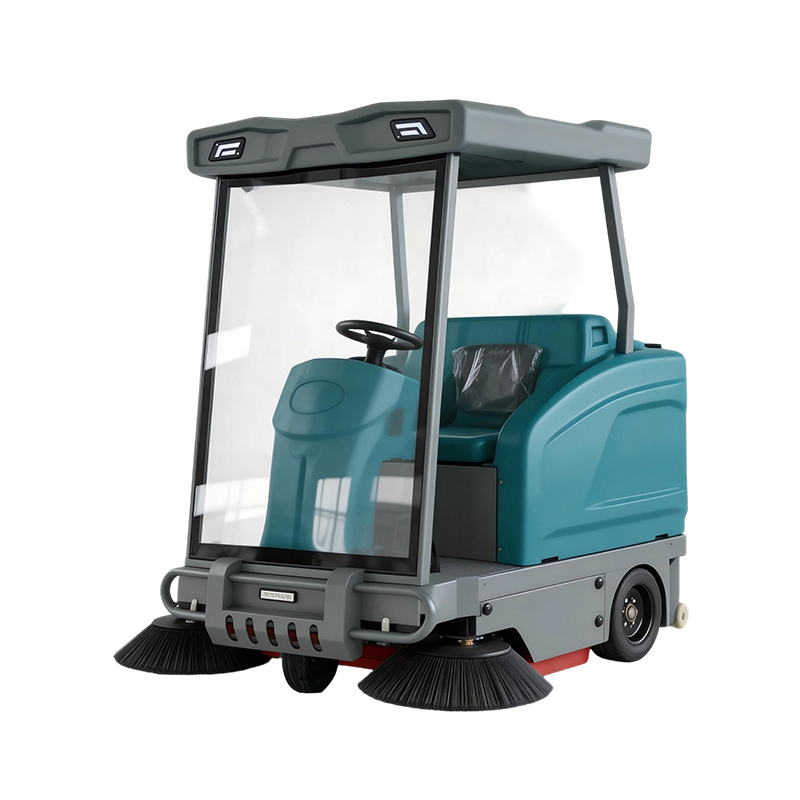
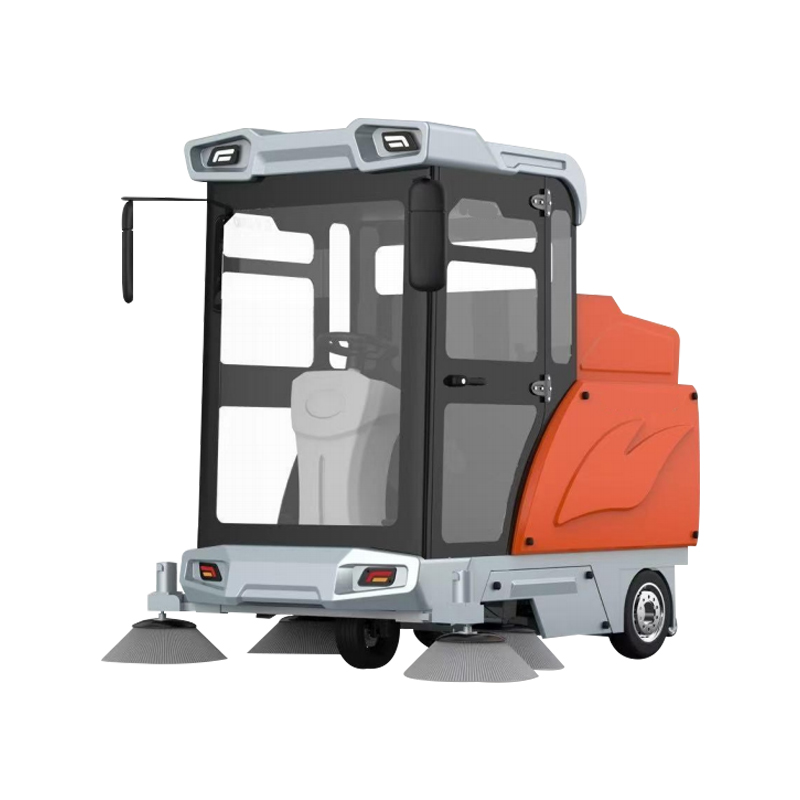
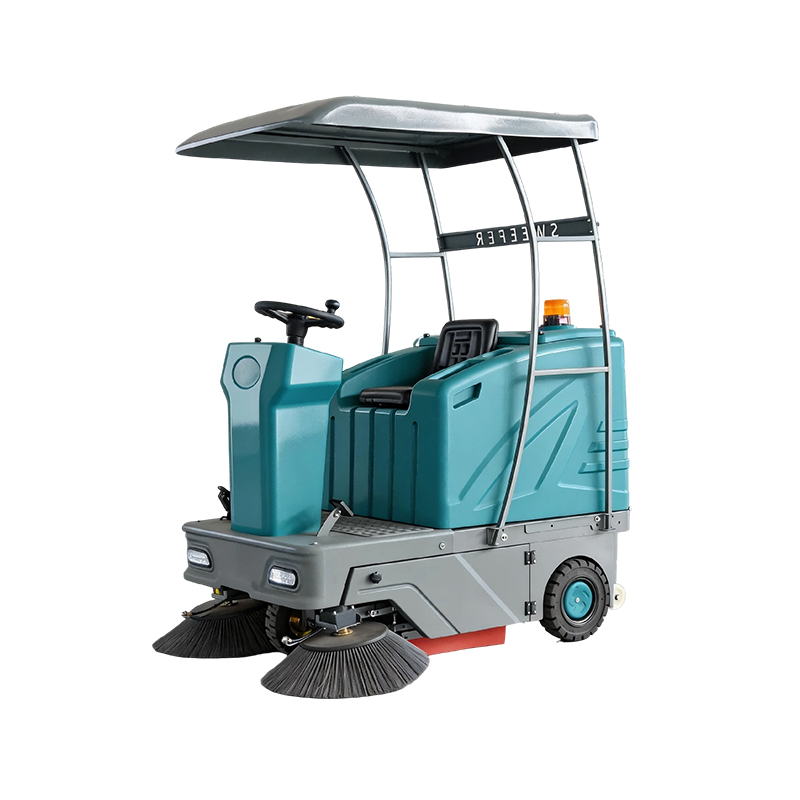
The sweeping system is the primary interface between the machine and the floor, responsible for agitating and collecting debris. Its design directly impacts cleaning effectiveness and coverage. Side brushes, often equipped with spring-loaded or hydraulic damping to avoid obstacles, extend the effective cleaning path and direct debris toward the main brush. The main brush itself, typically a cylindrical roller, comes in various material compositions (high-density polypropylene, carbon steel wire) and bristle patterns to handle different debris types, from fine dust to heavy bulk materials.
| Component | Function & Key Features | Impact on Performance |
| Side Brushes | Extend cleaning width; guide edge debris inward. Features include automatic lift/retract and wear indicators. | Determines how close to walls and obstacles the machine can clean effectively, influencing overall area coverage speed. |
| Main Cylindrical Brush | Agitates and lifts debris into the hopper. Variants include anti-static brushes for plastics and heavy-duty wire brushes for metal. | Dictates pickup efficiency for different debris types. Brush pressure adjustment is key for varying debris loads and floor surfaces. |
| Hopper Design | Stores collected debris. High dump angles and large capacities reduce emptying frequency. | Directly affects operational uptime. A larger, well-designed hopper is a hallmark of a heavy duty warehouse sweeper machine. |
Controlling airborne dust is not just about cleanliness; it's a critical health, safety, and regulatory concern. An effective dust control industrial floor sweeper employs a multi-stage filtration process. Primary separation often occurs via a cyclone system that uses centrifugal force to remove heavier particles. Secondary and tertiary filtration through pleated cartridge filters or even HEPA filters captures fine, respirable dust. The key to sustained performance is a reliable filter cleaning mechanism, such as reverse-pulse jet cleaning, which automatically dislodges dust from the filters into the hopper, maintaining suction power and extending filter life.
The choice between electric and internal combustion power is fundamental and has long-term implications for operating costs, indoor usability, and maintenance. Electric sweepers, powered by lead-acid or lithium-ion batteries, offer zero localized emissions, lower noise, and reduced "fuel" costs, making them ideal for indoor use. In contrast, a diesel powered industrial sweeper provides unparalleled runtime, higher torque for demanding conditions, and independence from charging infrastructure, which is essential for large outdoor yards or 24/7 operations, though it comes with exhaust emissions and higher fuel costs.
| Power Type | Best Application | Key Advantages | Key Considerations |
| Electric (Battery) | Indoor facilities, enclosed spaces, multi-shift operations with opportunity charging. | Zero emissions, quiet operation, lower energy cost per hour, less heat generation. | Limited continuous runtime, battery replacement cost, required charging infrastructure and time. |
| Diesel | Large outdoor areas, rough terrain, extreme dust conditions, very long uninterrupted runs. | High power and torque, virtually unlimited runtime with refueling, often higher air flow for dust control. | Exhaust emissions (require ventilation), higher noise, fuel cost and storage, more complex engine maintenance. |
Choosing the right machine involves balancing technical specifications with financial rationale. The upfront large area driving sweeper price is just one component of the Total Cost of Ownership (TCO). A savvy buyer evaluates the investment based on long-term productivity gains, reliability, and operational savings. This section helps you navigate the financial landscape, from understanding what drives the price of a new industrial four wheel sweeper for sale to evaluating the pros and cons of the used market. The goal is to make a decision that delivers the best value over the machine's entire service life, not just the lowest initial purchase price.
The price of a new sweeper is determined by a combination of its core specifications, advanced features, and brand positioning. A machine designed as a heavy duty warehouse sweeper machine will command a higher price due to its reinforced chassis, larger capacity components, commercial-grade hydraulics, and more sophisticated control systems. When evaluating cost, it is essential to consider TCO, which includes not only the purchase price but also projected expenses for energy/fuel, routine maintenance, filter and brush replacement, and potential downtime.
The market offers various avenues for acquisition, each with distinct advantages. Purchasing a new machine from a reputable manufacturer provides the latest technology, full warranty coverage, and peace of mind regarding the machine's history. For businesses with a clear long-term need, this is often the most reliable path. The used market can offer significant upfront savings but requires rigorous due diligence. A thorough inspection should include checking engine or motor hours, examining the condition of the brush assembly and filters, testing all hydraulic functions, and reviewing any available service records. Partnering with a manufacturer known for durability and support is crucial for long-term satisfaction. A company like Zhejiang Jianchao Machinery Co., Ltd., with over two decades of industry expertise in material handling and cleaning equipment, exemplifies the value of integrated manufacturing and a "Quality First" philosophy. Their relocation to a modern 30,000 sqm facility in Zhejiang underscores a commitment to scaling production and technological R&D. For a buyer, this translates into equipment built on extensive experience, with the geographical advantage of efficient logistics via nearby major airports and highways, ensuring reliable supply and support for a critical asset like an industrial sweeper.
The relationship with your sweeper begins at delivery, not ends there. Maximizing the lifespan and return on your investment requires a proactive approach to training and maintenance. Even the most robustly engineered machine will underperform and fail prematurely without proper operation and care. Implementing a structured operator training program and a disciplined preventive maintenance schedule are non-negotiable for ensuring the equipment remains a productive asset, maintains its dust control efficiency, and avoids costly unplanned repairs that disrupt your operations.
The most critical feature is a high-efficiency, multi-stage filtration system with an automatic self-cleaning mechanism. Look for a dust control industrial floor sweeper that combines cyclonic pre-separation to remove bulk material with high-square-footage cartridge filters. The automatic filter cleaning (e.g., reverse-pulse) is essential, as it maintains constant suction power by preventing filter clogging during operation, ensuring consistent fine dust capture throughout the shift without manual intervention.
The decision hinges on your primary operating environment and duty cycle. Choose an electric sweeper for indoor, enclosed, or noise-sensitive applications where zero emissions are required. It is ideal for standard warehouse duty. Opt for a diesel powered industrial sweeper for extensive outdoor areas, extremely large indoor spaces with superb ventilation, or non-stop multi-shift operations where refueling is faster than recharging. Diesel provides more power for heavy debris and unlimited runtime but requires management of exhaust emissions.
When evaluating an industrial four wheel sweeper for sale on the used market, conduct a thorough mechanical and operational audit. Be highly cautious of machines with incomplete service histories or signs of major impact damage. Prioritize checking the engine or drive motor hours (like a car's odometer), test the functionality of the hydraulic system for the hopper and brushes, inspect the main filter elements for damage or improper cleaning, and operate the machine to ensure it drives straight and the suction power is strong. The cost of replacing a diesel engine or a full set of lithium batteries can negate any upfront savings.
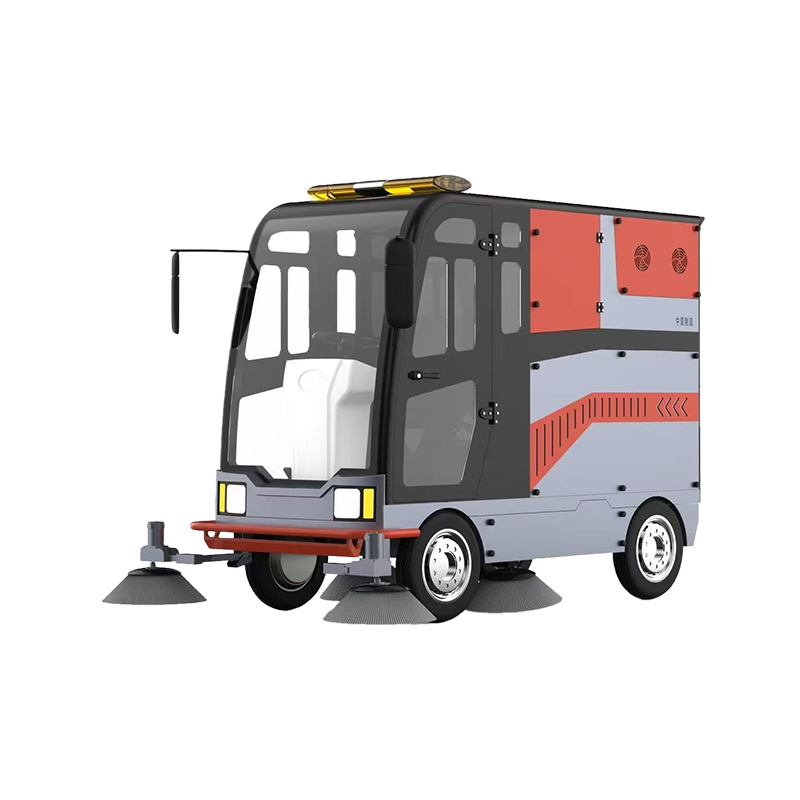
A true heavy duty warehouse sweeper machine is characterized by its construction and component quality. It features a reinforced steel chassis and frame to withstand constant use and potential impacts. It has a high-capacity hopper (often 1 cubic yard or more) and a powerful vacuum system to handle large debris volumes. Its brushing system uses robust motors and easily replaceable, wear-resistant brush material. Essentially, every component is rated for more frequent use and heavier loads than a standard commercial model, ensuring durability in demanding multi-shift industrial environments.
Not necessarily, but a higher large area driving sweeper price often reflects advanced features, superior build quality, and greater productivity that can lead to a lower Total Cost of Ownership (TCO). The key is to assess if the premium features address your specific needs. A sweeper with advanced dust control may be worth the price for a food plant but overkill for a logistics yard. The "better investment" is the machine whose capabilities most closely match your operational requirements, offering the best balance of purchase price, productivity gains, operating costs, and expected service life with minimal downtime.

Contact Information
Xiaopu Langshan Industrial Park, Changxing County, Zhejiang Province, China
Keep in Touch
Can't find the answer you're looking for? Please chat to our friendly team.


 English
 中文简体
中文简体
 Español